Episode Transcript
[00:00:03] Speaker A: Welcome to the Ortho Joe Podcast, a joint production of the Journal of Bone and Joint Surgery and Ortho Evidence.
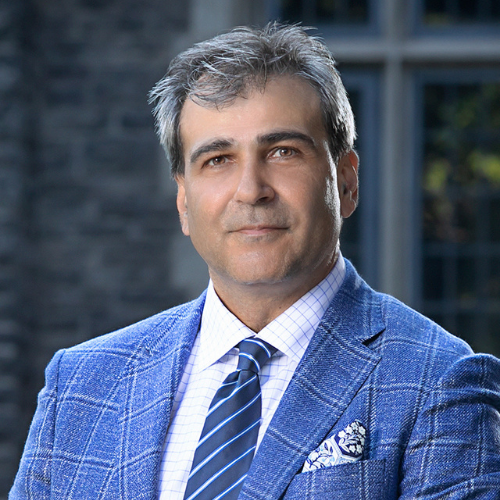
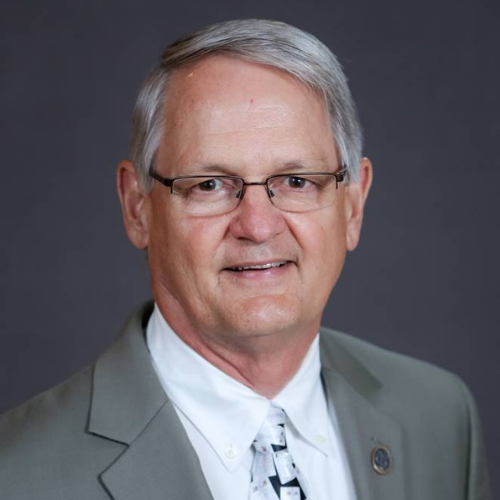
Join hosts Mohit Bhandari and Mark Swankowski as they discuss current topics and publications in the world of orthopedics and beyond.
[00:00:18] Speaker B: Well, good morning, Mark. Another cool fall morning for us in Canada. But of course, I have a little bit of caffeine to keep me going. Hopefully your morning starting a lot better than our last one, I think, where you are really early. Oh, you've got your Dunkin Donuts. I love it.
You've switched. Yeah, you switched. I love it.
[00:00:37] Speaker A: Well, let me just start out by giving a strong and serious condolences to the people of Toronto. I really felt like the Blue Jays deserved to win that baseball game. I find it more painful than the Leafs never being able to get out of the second round myself. And I know it must hurt worse for.
For you.
[00:00:59] Speaker B: I was with a number of fellows this morning, like, early this morning before this podcast, and they were at, like, they got tickets, they were there. They thought, like with, you know, two outs, up by. Up by a run, that. Okay, like they were envisioning, celebrating, Literally. Yeah, the next hour. And that celebration ended very quickly. Very quickly. But, you know, it is amazing. I mean, Toronto still looks at them as massive mass heroes for us in Canada. Does, too.
[00:01:27] Speaker C: So, of course.
[00:01:28] Speaker A: And just wait till next season.
[00:01:30] Speaker B: Just till next season. Yes, absolutely.
[00:01:32] Speaker C: It's always.
[00:01:32] Speaker B: There's always next season. That's kind of like.
[00:01:34] Speaker A: It's kind of like us with our trials. Right? Just wait till the next trial.
[00:01:38] Speaker B: Wait till the next one. Yeah, wait till the next one. It's gonna be bigger and better. Bigger next one.
[00:01:43] Speaker A: Yeah, we'll avoid it all. All the problems with the next.
[00:01:47] Speaker B: Well, listen, we, you know, we have been doing this for a bit, Mark, and. And occasionally we have, you know, our listeners who enjoy some of the things you're doing but also provide additional insights. And we had one additional insight that came to us from Dr. Anton Lambers. And Anton is currently a sports and arthroplasty fellow in Perth. But he also was a consultant for the last couple of years. But he's not here just to speak about orthopedics. I think he's here to really speak about some time he spent in the last year, 2024, as you wrote, in a caravan with my wife and kids, traveling around the coast of Australia, visiting orthopedic surgeons along the way. And his. In bold, he had written. I thought it'd be a great idea for Your North American colleagues, our North American colleagues, our residents to consider something of this sort when they're thinking about their own lives and their careers. So, Anton, welcome to Ortho Joe, and we're really quite excited to hear a little bit about why you did what you did and sort of how it turned out for you.
[00:02:49] Speaker C: Thanks. Really nice to be here and nice to meet both of you. So thanks for putting me on. I put that an article into your Ortho buzz sort of resident roundup because I thought it'd be interesting to share and like, I thought maybe some North American, you know, new graduates might think about the same thing. But effectively one of my colleagues, Dani Devilius, who's a South African Australian, who had this concept of a gap year, basically after training and living in a caravan with his three kids and wife and doing a lap around, we call it, they call it the big LA Australia. It's a thing that people do. And I thought, man, that sounds amazing, I want to do that. And so I said, do you mind if we join you? And I spoke to my wife and we had a three month old and a two year old at the time and we had a caravan that we had, you know, lined up to, to buy and we thought it'd be a brilliant idea. He was very keen to not set foot in the hospital for the whole year. He was just like, I'm not doing that. This is the gap. You know, I was kind of like, well, you know, I like meeting people and I like doing little visitations from time to time to see if I can pick up some tips and tricks. And is he. And working rurally long term in a regional practice. And so I thought it'd be great to meet some other regional surgeons around Australia and see how they manage their practice, their work, life balance and also, you know, some surgical tricks that I might be able to pick up along the way. So the way I said about it was that maybe I'd made a timeline of 12 months to go around the coast. It's about 15,000 kilometers in our language. And you know, by the time you do all the driving around each campsite and in fewer in between, it sort of ends up being sort of 40,000 kilometers of a year. And I thought, I'll contact the orthopedic hospitals that I go through and say, hey, is there anyone there that I'd like to see? And then approach them. And all of them are very receptive and welcoming to have me along and go to the theater and as an observer or go to go to a session in their consulting suites and see how they're running their practice. So it was, it was pretty few and far between, if I'm honest. So there was many months where I didn't have anything because on the map of Australia you can go thousands and thousands of kilometers without seeing a hospital. But when there was opportunity there, I took it. And in between we did lots of other fun stuff as well.
[00:05:02] Speaker A: Yeah, Anton, if I could just jump in because there might be listeners that don't really understand how big Australia is, but it takes as long to go from Sydney to Perth on an airplane as it does to go from Miami to Seattle.
So we have this impression just. I don't know, because we're so underworldly and not traveled very well as Americans, I won't speak for Canadians, but that we don't understand. We think it's an island and it's like the size of Hawaii or something, but it's a massive continent.
[00:05:35] Speaker C: I've got family in Europe, like in the Netherlands. And I tried to do on Google Map, so you can do the point to point distance. I tried to draw them on the map of the world how far we'd driven. If it was a straight line.
And I couldn't do it because I had to come back to where I was. It was, it was bigger than the equator.
By the time you do a loop of Australia and all the side trips you do off the sides, it was, I think it was 40,000km or something. So it's enormous and it's so vast. And I didn't appreciate even as an Australian until last year because you just go from a couple of capital cities we have, there's hardly any population and facilities in some places. And it's incredible.
[00:06:15] Speaker B: Can you speak, Anton? To just the whole idea of a gap year. How common is it? Are you doing something that is relatively rare? I'm guessing it is even among your peers in Australia, certainly in US and Canada, I suspect in Europe as well. The idea of a gap year is often for. Well, I'm going to take this gap year so I can get into something else. I'm going to prepare for something else rather than I'm going to take a year to genuinely rewire, reset, re energize. Two different reasons, I think, why people do it.
[00:06:46] Speaker C: Yeah, I think people do a similar thing. So traditionally most people from Australia will either do at the end of their training, they'll either go straight into a fellowship, typically overseas, UK and North America probably the most common, or they'll do consultant work for six to 12 months and then they'll go overseas. Some people go directly into work. You don't have to do a fellowship to get a position as a consultant in Australia.
And others will do kind of like a gap year, but they'll do so called visitations, which is sort of like a structured holiday, usually to Europe, and visit sites as an observer for a few weeks, but then have some time with your family traveling in between. And that's sort of less than operating job, but more of a, you know, observation.
Pick a few select surgeons that you want to see. And yeah, my friend Dani pretty inspired me that he was just like, no, I'm just gonna. I'm just gonna stop and take a year off. And it's gonna be about spending time with our families because we've taken a lot of time from them to study, to go through training, to do on call. You know, he had three kids during his training and I had one and one soon after. And we hadn't spent as much time parenting as either of us would have liked. And we thought if we could do a 365 days of 247 parenting and help our spouses out and spend more time with our kids, we thought they were pretty special. There's one other surgeon I know in Australia who'd done that before, who's relatively young. There's probably a bit of stigma around not being productive, I think for an entire year. And it's something both of us are sort of a little bit concerned about. Like you wonder about your own skills de skilling, and also you worry about what your colleagues are going to think about you doing that instead of a fellowship or doing work.
And both of us have reentered practice this year in 2025 and not found either of those things to be an issue. And I guess that's why I thought it'd be worth putting that article on the roundup to say, look, this is something you can do. You can come back from it. It's worthwhile doing. Don't worry about what other people will think of you.
[00:08:46] Speaker A: That's very helpful. I'm sure it will influence a lot of people.
Just the whole concept is quite interesting. Can you tell us how much planning went into it? Did you know exactly where you were going to stop and for how long you were going to stay? Or did you kind of do some of it on the fly as you were moving around the country?
[00:09:06] Speaker C: You can do it both ways. People that do it for lifestyle as a permanent thing almost, they'll Just do it on the fly.
Mainly. The main reason to plan is because of the highly competitive campsites. There are some really special campsites around Australia, in particular in WA and in particular over school holiday periods where if you don't plan ahead, you'll be on the side of the road camping because you couldn't get to the beachfront site. So we planned in particular school holidays. We booked those out and then the high impact sites that we really wanted to be to like the. There's places in, you know, northern Western Australia where you can drive your caravan onto the beach next to the waves on a reef and camp and fish and swim and snorkel. So those ones six months out, you've got about 10 minutes to book a site and then they go. They open six months out and they're gone within seconds. Um, so those ones were up at night, 12pm or you know, even 3am trying to refresh the screens and book them. Other places we knew that it wasn't school holidays. You know, we had time, we didn't book everything. I'm more of a planner, so I tend to book a lot of things. Danny's pretty, a bit more flexible and was a bit more relaxed about it in terms of the visitations. I just said to people around this month, I'm going to come, I don't mind, you know, don't organize a list for me, but I'll just reach out when I'm there. If the kids are behaving and, and everything else is in order, I'll just turn up, if that's okay. And everyone's pretty flexible about that.
[00:10:29] Speaker B: You know, there's something you said that strikes me and I've been using it most recently, probably 2025. Every single time I've spoken in 2025, I have a slide that says, don't confuse being productive with being impactful. And I think, you know, there's this idea that, you know, I'm spending a year away and I'm not, quote, productive in the conventional sense of what that looks like, which is your writing, publishing, seeing cases, doing something, you know, growing. Can you speak a little bit to the growth you had in what I would consider to be a really potentially probably life altering experience for you, something you'll remember for the rest of your life. What were the big important memories you take away? I'm guessing, I'm guessing, Anton, it probably wasn't the hospital visitations.
[00:11:14] Speaker C: No, certainly not. And I think they counted for it. You know, a percent or two of my days as a disclaimer I'm an academic and a nerd and I wrote my PhD using Starlink along the way too. So I wasn't completely unproductive. But I spent, I didn't spend much time on that and I spent most of my time with my family.
I think the most memorable times are just working out how to parent with your spouse full time, which often in medical specialties. My wife's a family medicine practitioner and you know, you can, it can be shifts in the night between her exams and mine and childcare. So sometimes you don't get to spend a lot of time parenting together. So to spend 12 months parenting together, we learned about each other's parenting style and had to negotiate differences and communication and work better as a team. And I think that's an experience you wouldn't have ever had. And at most for a week or two on a holiday at a time.
So that was powerful in terms of working out how we can work as a team and parent together.
And it changed my relationship with my kids in a big way. And when we left, my daughter was 12 weeks old, my son was 2 years old, and my son was probably 1 or so at the time of my fellowship exams. And I didn't get to spend heaps of time with him when he was a small baby and a toddler. And I found that I could have a really nice relationship with my daughter as she went through her first year of life, which I was pretty much there for every day.
That was really special. And I also got to connect on a deeper level with my 2 year old who, you know, we got to become really good buddies and hang out a lot more than we, I'd been able to before I had stopped working.
So probably the profound relationships with my family was the most important thing. Spending time with my friend Dani was really important to me and his family and our kids all got along and just being outdoors in nature, stargazing, you know, staying on beaches, cattle stations, hot rainforests, snorkeling is all just amazing. And getting to take our kids around and expose them to that was just amazing.
[00:13:10] Speaker B: Did you happen to journal at all? I know you're writing sounds like you're doing some scientific writing, but do you, do you have any other practices? Like, you know, you're, you're at this place, you're staring out, as you said, into some beautiful, beautiful scenario, some scenes. Do you have any daily habits that you have adopted since you've been on this year long travel?
[00:13:30] Speaker C: No, I can't say I'm much of a Journal. I do like writing productive stuff, but not, you know, journaling. But I enjoy sort of videography and I can show you later on, but I did quite a few sort of videography projects along the way where just every couple of weeks I'd try and grab my videos off our phones, take some videos with a drone of where we've been and take some videos of the kids and put them together in a quick little wrap up. And I'm still a little bit behind because I stopped about 3/4 of the way around and got carried away with PhD stuff. But I'm trying to finish them now. But I've probably done most of the year and that's something I want to keep going forwards that I can show my kids and remind them of what an experience they've had. So it's kind of a video journal, I suppose. We talk about what we've eaten and what we've done and where we are and there's maps and that was my way of sort of documenting and, you know, recording that really precious experience.
[00:14:18] Speaker A: Look forward to seeing that at the end of this discussion. But can you just give us a sense of how a bigger role of physical exercise plays. Plays in your. Your trip and in your. Your life ongoing?
[00:14:31] Speaker C: Yeah, I think I'm generally fairly active. I enjoy playing basketball, so I've played for the team basketball for the last 25 years or so.
I couldn't play that. Obviously. We took a.
My savior as a. As an active parent was one of those Thule jogging sort of prams with the two seats and a thing. So I have been living in an area with snow where I could put little skis on the. Instead of the wheels. And last year we brought it around and it attaches to your bike and you can also run and use it as a pram as well. So that was kind of my savior when we obviously got to spend time with our kids all the time because we didn't have any daycare or school. But I didn't have to be stuck in the caravan or in one location. So I'd jump on the bike with my wife or we'd go for a run together and jog with the jogger and keep active that way. We also just did heaps of hiking. Like all of the outdoor areas we went to always had hikes and things that we wanted to go and see and explore and often carrying a couple of kids on our backs. So we kept active because every day we were just doing stuff. All the beaches where they weren't sort of Crocodiles or stingrays. Then we were swimming every day and snorkeling and diving and. Yeah, and at home you basically play basketball, ride bikes, enjoy mountain biking, which I think you did too, Mo. But.
And commit down.
[00:15:48] Speaker B: Very different, but Anton mine's gravity assisted, so maybe you like going uphill, but I like the other way.
[00:15:53] Speaker C: No, no, I'm the same. Gravity's. Gravity's better for me too.
[00:15:59] Speaker B: So there'll be some folks listening, whether they're early career residents, they're senior residents. It might be a fellow, might be a faculty who's just yearning to do what you've done. How. How do you recommend someone get started? What do you recommend they do? Suppose they're inspired by your goal and they may say, listen, I. I can't do what he did. I want to do parts of it or elements of it. How do you recommend someone get started or even think about doing something like this?
[00:16:25] Speaker C: I think the most important thing is just sit down with your spouse and put it in the diary and say, this year or this six months or this three months, we're going to do this. And then everything else kind of flows on from there and most people are too afraid to take that step or don't think that it's possible, and then it doesn't happen. So you've got to say, look, this is the plan. We're going to set our exams or do a year of work, and then January 1st or whatever this day, we're going to leave and we're going to not work, we're not going to take any contracts and we're going to do this financially. You've got to prepare yourself. So we definitely didn't live luxuriously on the road and you've got to be fairly lean with your funds and working for six or 12 months beforehand can help with that. We have what we call locums, where you can help cover other practices or help cover hospitals before you settle into a permanent role that can help, you know, put some money aside so that you can buy some food and petrol.
And then there's just a matter of, you know, planning your trip in terms of accommodation, getting an RV or a caravan.
You could even do it just with a few Airbnb or something, too, and having a little itinerary on a spreadsheet and saying, this is what I'm going to do. If you're interested in the medical side of things and observerships, then you just reach out to people, say, hey, I'm. I'm taking some time off from Work, my family. But I'm going to be coming through your town and I'd love to see what you do. I haven't had anyone say, no, thank you. I've been to sort of, you know, Mount Gambier, Adelaide, Perth, Darwin, Townsville, Cairns.
Yeah, all the way around. Every, every, every center, big or small, was very happy to have someone pop in.
[00:18:01] Speaker B: Well, that's amazing. I might ask you if you don't mind showing us some video footage now. You, you said you've captured some and maybe you could give us a small narration. I know might be a couple of minutes or so of that.
So for those of you who are listening, you may want to. On this particular podcast, you may want to jump to our video feed to take a look and see some of the sites you'd be missing if you didn't take Anton up on this idea of doing this. Almost like a sabbatical year. But it's not quite like that, right? It's, it's really a caravan year where you're out. The one thing I will say as you're getting set up here, Anton, before you play start about 10 years ago, there's a surgeon in Calgary, Alberta, Canada, and his name was Paul Duffy. He was a trauma surgeon. And we invited him for grand rounds at the, at McMaster University. And I was head of the division there. And I said, you know, Paul, speak about something you've done that, you know, that might be a little bit atypical. And he says, well, you know, I just took three months off, you know, and you know, he'd been, he'd been at his job for many, many years. So he was much more mid career than he was early career Anton.
And he said, you know, I've always been afraid to take more than a week or two off my whole life, but I decided I'm going to take three or four months off at once. And everyone said the same thing, like, you know, you're going to lose this, you know, you know, how are you going to come back to this? This is going to be difficult for you to organize your life.
Long story short, he said after he had done it, he said it was the best thing he'd ever done. He convinced everyone and then he became basically a speaker on that topic. He was giving that talk many, many places. But I feel kind of a little bit, you know, happy that we were the ones that encouraged him to speak to that issue because we thought there'd be lots of people listening and interested and he's never looked back. So he's he's made it part of his routine.
And I wonder about you. Before you hit to your video, do you feel that you'll ever do something like this again?
[00:19:48] Speaker C: Yeah, definitely. Like, I think maybe not a year and maybe not soon.
Like for us as surgeons, you pretty much all of us, you need to start a private practice as well as a public one and that means you hire staff and it's very difficult to hire someone for six months and then say you're fired again and then come back a year later and say, I'm hiring someone again.
But yeah, certainly I'm going to be challenging those.
[00:20:13] Speaker C: Dogma phrases like you can't take more than two weeks off at a time or you can't do this. So I'm very keen to have more experiences with my family in Australia and abroad where we do things.
Lots more as possible than what people tell you, I think. And as long as you're structured and you plan and you communicate with people, I think you can have opportunities. Maybe not 12 months every second year, but, you know, I think these things are possible and I'd love to do stuff like that again in the future when the kids are old. I'd love to do that trip again now. I guess I can.
[00:20:45] Speaker B: Great. Well, lovely. We'll let you move on and maybe you can just have to.
[00:20:48] Speaker A: Sorry for interrupting. Mo, I just have to ask, is Tasmania the next location you're going to take care of?
[00:20:53] Speaker C: We didn't do Tasmania actually. We want to do Tasmania as a standalone trip. We did the mainland this time. Yeah, I don't want to spend a good month or two, but yeah, that's definitely high up on the list of places. Alaska is next for me as a skiing destination, but that'll be my next family trip.
[00:21:08] Speaker A: Oh, that's great.
[00:21:09] Speaker B: All right, we'll let you move.
[00:21:11] Speaker C: Did the music work before? Is it just the visual that you can see?
Yeah.
[00:21:15] Speaker B: We weren't hearing music.
[00:21:17] Speaker C: You were?
[00:21:18] Speaker B: No, we were not.
[00:21:19] Speaker C: No. Okay. I think you won't be able to hear about. Basically this is a video of a sort of map of where we were going. This is kind of the typical, you know, weekly or fortnightly wrap up that I'd make. And I basically show a map of where we went on a line and then some footage from drones and from our phones of, you know, the time we spent together. That's my daughter sort of in the Sunnies in the front of our Land Cruiser and there's one of our campsites, there's our two caravans together. And Danie had a little inflatable boat that was. Had an outboard motor that was great. So we could hop out in that and go to the reef. And he's a mad fisherman. We tried on this particular campsite to go drone fishing, where you release your bait from the drone out at sea so you can cast really far. But I flawlessly went out too fast on the. On the drone. Then it caught up to the line and just jacked, stalled, and then sunk into the ocean a few hundred meters. So I lost. I did lose a drone here.
But, yeah, just heaps of, you know, breath hold diving and fishing and, you know, campfires and time on the beach and everything else.
That's me with my boy making a video and just, you know, time spent on the beaches and.
Yeah, you build up heaps of communities and meet really nice people and we had an absolutely beautiful time.
[00:22:38] Speaker C: And this is one example of one of those camps where you just, you know, basically you live on the beach and we do this for sort of weeks at a time off grid and on the coast. And it was very, very special.
[00:22:49] Speaker B: This is that camp that looks amazing.
[00:22:54] Speaker C: Wow. Fantastic.
[00:22:56] Speaker B: Amazing.
[00:22:57] Speaker C: And it'd be like that for a long time before you had to go back to town for some resupplies. And then you just go to town for a day or two and then you go back out to another campsite and just work your way along the coast. If it wasn't sort of at beat in beaches, it'd be sort of at what they call station stays, where you can stay on cattle stations and they'll feed you some of the beef and have some entertainment going on and. And some, you know, attractions and things to look at and you move on to the next place.
[00:23:23] Speaker B: Absolutely amazing. Amazing. Well, you know, we could spend hours and hours with you probably, and I could probably spend hours just looking at all the video you shot. So as you can imagine, we'd have an open invitation for you to join us back and maybe next time we can chat about some of your research. It sounds like you're obviously, that's very boring. Yeah, very boring.
[00:23:42] Speaker C: Conveyor.
[00:23:44] Speaker B: I'm sure you'll have a different creative spin on it, you know, especially given the fact that you've been thinking deeply about it during this caravan. So certainly something that is worth thinking about and certainly something that I think you're also advocating as not really having in any way of negative, if anything, a major positive impact on your life. So, Anton, thank you so much for reaching out and guaranteed we'll be chatting again. And Marco, as always, great to have you with us this morning.
[00:24:12] Speaker A: Yeah, thanks, Anton. You've been quite an inspiration, I'm sure, for many, many of our listeners.
[00:24:17] Speaker C: No problems. Yeah. I hope people know that it's possible. Don't feel judged by others and it's a really good experience if you can make it work.
[00:24:26] Speaker A: And you can still operate when you get done with it.
[00:24:30] Speaker C: Yeah. You don't deskill as much as you think.
[00:24:32] Speaker B: Yeah, lovely. Thank you so much, Anton.
[00:24:36] Speaker C: No worries. Thank you.
Bye.
[00:24:38] Speaker A: Bye.
[00:24:39] Speaker B: Bye.