Episode Transcript
[00:00:03] Speaker A: Welcome to JBJS Ortho Corps. Listen as members of the ortho community, residents, surgeons, educators, staff and patients share their stories about the experiences and people most important in their lives and the lessons they learned along the way. OrthoCorps is an audio archive inspired by StoryCorps and independently organized by the Journal of Bone and Joint surgery.
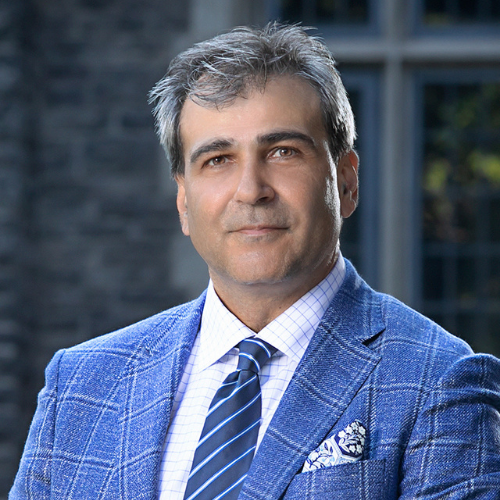
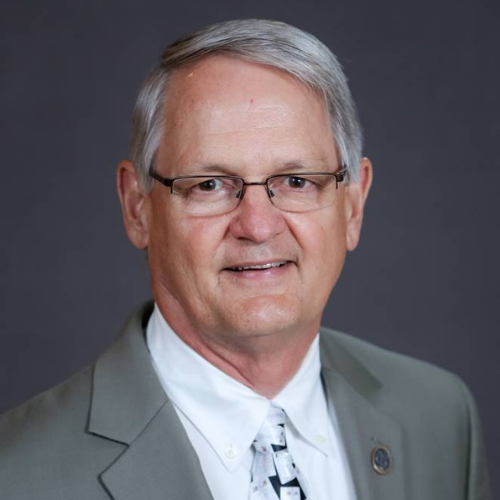
[00:00:29] Speaker B: This is Dr. Bernice Dahlberg and we're at the Mid America Orthopedic meeting in San Antonio, Texas. And I'm with Dr. James Keeney who is stepping, who's just finished his term as president of the Mid America.
Jim, I appreciate your taking time to talk to us this morning.
I'm wondering if you could tell us a little bit about you and your practice and how you started in orthopedics and how you got interested in the Mid America Orthopaedics association. And then we'll talk a little bit.
[00:01:02] Speaker C: About your time on the board and your vision for what Mid America Orthopedic are. Well, great. Yeah, thanks, Bernie.
Yeah, thanks, Bernie. So I started in orthopedic surgery with my residency training at Washington University in St. Louis. That was between 1993 and 1998.
I had a commitment to the Air Force. I had gone to the Air Force Academy and had a, at that time, a nine year commitment.
So I went out when I finished residency. I went out into a general orthopedic practice for my first five years. I was in Virginia for the first three of that.
And then I came back to a place called Scott Air Force Base, which is right across the river from St. Louis, Missouri, where I grew up.
I was there for a couple of years and had been approached about taking a position or getting extra training to take a position as a hip and knee reconstruction specialist at a place down here in San Antonio called Wolford Hall Medical Center.
And so I had done my finished my residency training with Bill Maloney, it's the chief of our joint placement service at Washington University. And he offered me a position at that point. That was in 2003, 2004 when I did my fellowship and I worked with both Bill Maloney and John Clowesy there during my fellowship. So that was a pretty broad approach, at least as far as hip and knee reconstruction was concerned, and added a element of the preservation at that point in time, in 2003 and four, a lot of that was being performed open and not arthroscopic.
And then I returned after my fellowship. I came back down to San Antonio, was here for about six years. It was pretty busy time. If people remember some of the history we we had some things going on in the Middle East.
I'd been on two deployments to the Middle east when I was in the military between 1999 and I think went on another one in 2002 when I was a general orthopedic surgeon.
And then when I came down here it was the most fully staffed hospital the Air Force had. So we often got called up to go on to taskings over in Iraq. So in 2005 and 2007 I went on a couple of combat tours in Iraq and did fairly busy trauma support practice for that kind of trauma. Not the typical things that we see in the United States. And then after finishing my six years, I had been in good touch with John closely during my years in San Antonio. He actually came down here and helped me with a couple of periacetabular osteotomies. I didn't do them. I didn't see those patients enough in my practice to be comfortable doing them on my own. So he was very gracious to come down and help out cases.
I also attribute John to be the reason I kind of got involved with Med America, yet promoted to kind of present some work that we had done.
And so I attended my first meeting with med America in 2005, the year after I finished my fellowship.
We getting back to that we had finished up. I was getting close to the out of my time in the Air Force and thinking about what we were going to do. Connie's had four daughters and I was getting deployed around the world and at this point in time wash here asked if I come and take a spot there. So I, I went back to Washington University in 2010 and I was there on faculty until Richard Galberman was retiring in 2000, late 2014.
At that point, University of Missouri was looking for a chief of their hip and knee service. So the first by then to come and interview and I was somewhat surprised. I didn't expect to see what I found there. I was kind of seeing it a kind of an up and coming department similar to what Washington University was back in the 90s when I was in my training. I ended up taking a position and transitioning and felt it wasn't too hard on see it was too hard on what happened on kind of Washington University as it was a time of transition there too with Richard moving on and retiring.
And I've been at Hurricane Missouri for the last 10 years and have enjoyed my practice taking care of patients and teaching younger doctors and medical students and the things that we do.
[00:05:26] Speaker B: Not only do all of us to preach your service, but of course, and it's always helpful to learn about your colleagues and find out what amazing things they've done and how they've helped all of us in both our orthopedic community and beyond.
Your involvement with the Mid America then started with some guidance from Dr. Cloesy. But tell us a little bit about how you got more involved in America.
[00:05:53] Speaker C: Yeah, I mean, I think it's just from coming. I said I started coming to meetings in 2005, and at the first few meetings we came to, I would say it was pretty.
It's changed a little bit. I mean, we had some people that had presented a lot of their own individual research, and we had single individuals that might have six or eight presentations in a meeting and said there were some changes that occurred that allowed more people to come, which has been excellent for the organization as far as getting involved in specific leadership things. I was actually asked by, I think, Dave Lewallen to be on my first committee, and it was the Finance committee the year he was president, which I think was a 2011 year. So somewhere between 2011 and 10 and 11.
And I had visited Mayo Clinic, Robert Eric, who was one of my partners in St. Louis.
And when I was getting out of the military, transitioning in. We talked a few times. He said, you're going to be doing some complex revision work. It might be good to come and spend some time with Dave and I. And I. And Dave was gracious enough to host me. That was middle of 2009. So that's how I met Dave. And so I think, you know, a lot of the things with Mid America that's fantastic is you have a little bit more opportunity to engage with people when you're here and things that you might not have if you're in a smaller program or if you haven't had a lot of those experiences. But it was nice enough to have been on that committee with Dave and get started. I think Craig Roberts was on the committee along with me. And he was Louisville, was the chair of Louisville at the time.
And then Craig's done a lot of things, you know, as far as helping support the organization and with, you know, giving charitable giving by our members to be able to help sponsor the education grants that we give to residents and medical students who've come to meeting. So that was very good.
And had some other interactions.
I think Ida Bowery Barnes was.
Was a president and had gotten me into some committee work as well. I was on the membership committee and then had gotten onto the board, I think is a member at large. I can't remember if I was actually in that role or not for a brief period of time. And then Craig Mahoney was on the nominating committee the year he was president. And then kind of it was in that group of the nominating committee had got me said to be in the presidential mind. And then here we are three years later it says Blowing, you know, and.
[00:08:22] Speaker B: You, you have kind of overseen the, the way the board has functioned over the past year. And what kind of direction did you think you wanted it to go and how do you see it moving forward at this point?
[00:08:37] Speaker C: Well, that, I mean it's really interesting, you know, so we have a, there's several things obviously the board looks at. I mean, obviously we oversee the, the finances, we see the finances, what they are. I mean the organization takes care of itself. And I, you know, I think our management team, that's Pam Cluck who's been here for the last 30 years, Sue McKinley was working with her until, you know, five years ago. And then Ken Van Leer and Beth Howland are working there. So they manage a lot of the day to day things and they get things prepared so we can kind of focus on guidance.
We had a strategic planning actually started with Craig Delavalle last year and we had met in Chicago with Dave and kind of thought about how are we going to think about our organization for the long term. And members of our board came up as well. And we kind of sat down and thought about the directions we should be going. And it's like getting credit, Craig, I think for that.
But we thought the real purpose of America is educational. And so our focus is this meeting and, and how do we get ready for that.
We also had some thought. You know, obviously it's a, this has been a kind of year of transition all the concepts of inclusion and thinking about those things. But we recognize that we still have a ways to go and how we advocate for people coming into our profession and how we work to get people involved. And so we, we kind of thought about forming a committee which we have now that's on professional development, mentorship and inclusion. So, you know, and this is kind of maybe tricky language to kind of phrase in 2025. But you know, I think that it's, how do we, how do we encourage our younger doctors to get involved and also in a variety of different practice experiences so that, you know, that thing about being diverse is not just diverse in the way we look, but the way that we operate in the way we, we approach our profession, our craft. And I think that that's hopefully something going forward where we can pair up physicians to give them opportunities. We've had traveling grants of people who could go and, and we don't utilize those possibilities as well as we could. And so try to try to establish those relationships to help younger physicians, younger surgeons kind of grow in their professional experience. So that's something that kind of came out of, from the board this year. And you know, honestly, I think, I think we've had great leadership and, you know, for, for many years. And so, you know, to be kind of a part of that and being able to participate, I get to pass the, pass the baton off to Brian Wolf, who's an outstanding physician and researcher and, and he's going to be a great leader for the organization going forward.
[00:11:16] Speaker B: Do you have a message for young people as well as for those in practice as to how to think about Mid America and why it makes sense or how this adds value or for them?
[00:11:28] Speaker C: Well, I think, I think that it's a great meeting for younger doctors to come in. And I think the term is cut your teeth. But I mean, it's some of, some of the meetings that we have. It's difficult to get a paper at a large subspecialty meeting.
It's not as difficult here if you have residents and medical students worker there, even if you don't, if you if like doing clinical research and you're a private, private surgeon, it's a great place to be able to come and present immediately. I think for those of us who are in the northern states, it's really nice in the month of April to get away from what's not so great climate where we are. And we're sitting down here in San Antonio and it's in the mid 80s or they may be low 90s yesterday, almost no humidity. And it's just been a, a great way to kind of get away for that.
And I think that the other thing is it's opportunities for things like we're doing right here where you have time to sit down and talk with people. We have purposefully decompressed the schedule so that we have time for family and friends and other things. And then there are social functions. You know, each night with dinners, we sit down together and we sit down other people and talk and, and people usually hang out even after that's done, as late as they want to, if they don't have a talk immediately the next morning. And I think you get to know people. And I think that's been something very important over the course of the past 15 to 20 years.
And the pace, the pace of it is, I think, slow enough that it allows you to not be in a rush, running from one thing to another as you go through the meeting.
[00:13:03] Speaker B: Any other insights you want to offer before I cut this off and say thank you?
[00:13:10] Speaker C: It's great, I appreciate it, Brody, I think, you know, it's just this has been a nice 20 year run for me in this organization before continuing it. This a great place to continue in our process of learning together, growing together, and I think we're going to see some advancements in technology and innovation. Obviously we're kind of at a cusp of things with artificial intelligence and see where that goes in the next, you know, 10 to 15 years and just continuing to learn together and I think that's is a great place to be.
[00:13:41] Speaker B: I want to congratulate you on your year as president, all your contributions here.
For those of us who've been part of this organization on offer a long time, we see how you've helped that grow and we appreciate that and we hope you continue to do that with the group. Thanks again for sharing your observations with us and for your efforts on our behalf.
[00:14:05] Speaker C: Thanks, Brian. Appreciate it.