Episode Transcript
[00:00:03] Speaker A: Welcome to the Ortho Joe Podcast, a joint production of the Journal of Bone and Joint Surgery and Ortho Evidence.
Join hosts Mohit Bhandari and Mark Swankowski as they discuss current topics and publications
[00:00:15] Speaker B: in the world of orthopedics and beyond.
Well, hello, Mark. How are you? Another session of Ortho Joe. It's midday for us and so I don't know if you have thing. I don't actually have a coffee, but I do have a mug with some liquid in it and I won't share the liquid, but it is definitely something that keeps me awake, so it's all good.
[00:00:34] Speaker A: I got the dregs from this morning's coffee, which it's about a quarter cup, but it should keep me on track here for this discussion anyway.
[00:00:43] Speaker B: Excellent. Excellent. And as you know, from time to time we're able to chat with members of the editorial team, but who have taken on some new roles. And today we have just that individual. We have Professor Sanjeev Sevarwal, who is, I think, known to many in the JBGS family, but certainly it's a chance to introduce him to those who may not know him.
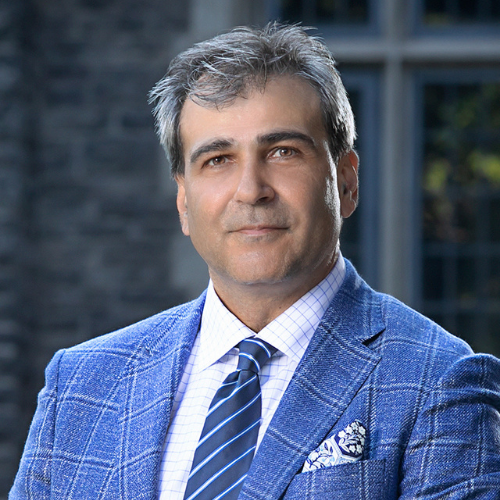
He currently is a professor of orthopedic surgery at ucsf, which is lovely, but has also taken on more recently the role of editor of JBGs reviews. So welcome, Sanjeev, and thank you again for taking a bit of time to share with us at Ortho Joe.
[00:01:22] Speaker C: Yeah, thank you so much, Mo and Mark, and the privilege and an honor.
[00:01:30] Speaker B: So let me just, if I could just start get you to tell us a little bit about your history with reviews. I mean, you have been involved with the editorial board at JBGS for some years now, and I think you are well acquainted with the previous editor, who I think in many ways is really the founding editor of JBGS Reviews, Professor Tom Einhorn. So I wonder if you might just share a little bit of that history and ultimately how it became to be that you moved into this role.
[00:01:58] Speaker C: Sure, Mo, thanks.
Actually, it was a series of chance moments, if you will, starting in 2009 when I ran into Dr. Warren Tolo, who's actually my fellowship mentor way back. And I still remember that little coffee break. And I was like, warren, I would love to be a reviewer for jbjs. And lo and behold, next month I get an invite for a JVGS to review JV JS paper.
You know, that sort of series of events then led on to that was, I think, 2009.
And fast forward to 2013 when I get another call from Vern saying, I need to talk to you. And I was actually a little nervous. I was like, damn, I must have messed up a review or something.
So.
And then he's like, how would you like to be Current Concepts Review deputy editor for JBGs? I still remember the feeling. I was like, ooh, that's so exciting.
As you mentioned, Dr. Tom Einhorn, I think 2013 is when they were trying to evolve into more JBGS platforms, including JBGS Reviews, and Tom was going to be the inaugural JBJS Reviews Editor. So that's sort of how I stepped into Tom's big shoes.
And, you know, it's a little bit of irony that now, what, 12, 13 years later, I'm again stepping into his shoes now as a role of editor for JVGS Reviews. I'm really excited. And Tom's really led the path in so many different ways.
[00:03:47] Speaker A: It would be worthy to note that Tom, before he took on JBGS Reviews as the inaugural editor, he. He too was the Current Concepts Reviews Editor. And he did that for a decade before he took on that new journal role. But, Mo, sorry I stole your thunder there for a second, but these roles are interesting and I would say difficult because Yu Sanjiva is a pediatric orthopedist, very interested in deformity surgery, limb lengthening, etc.
You're in a world of pediatric orthopedics, but yet you're able to do an outstanding job with topics that are way outside your personal experience. Clinically, I think that's a rather special trait.
Can you just talk a little bit more about why you find this of interest, invigorating in a way?
[00:04:44] Speaker C: Sure, Mark. I think a lot of us, including, I'm sure the two of you, we have the growth mindset.
So in some ways I see the unity and diversity. Of course, that's an overused term, but I really do. And there's so much. And I still remember there was a talk by Al Crawford, who's a pediatric orthopedist at one of the POZNA meetings. And he said, I learned so much, not just being in my operating room, but in seeing what's happening next door, be it an adult ortho or a cardiovascular case or something.
And I think in some ways, you know, we sort of bring those sort of principle based approaches in orthopedics, and I think that's attractive. So some of it is a selfish reason. I mean, I feel invigorated and I feel like, okay, I can apply this or that. So I love, you know, Indications Conference and you know, M and Ms. And things where, you know, we talk about broad based principles. So.
And I think on top of that, it's a great opportunity to sort of lean on the reviewers. And I think, you know, we've all sort of, you know, been, you know, exposed to different journals, etc. But I feel JB JS truly is unique that you've got such a rich number of reviewers who, you know, it's totally uncompensated, but they really do give very insightful reviews. So I learn a lot that way as well. So, so I think it's, it's, it's a lot of give and take, but ultimately it's a very fulfilling role.
[00:06:22] Speaker B: And it's not, I mean, Mark, you would know this and Sanjeev, certainly you would know this, is that the review article, when done well, I mean, high quality review articles have huge amount of impact, I would say, in terms of citation rates to authors of review articles. You know, they're likely to get, you know, two, three, four times more citations than even a primary scientific article for the obvious reasons that if you, if it's done well, it's, you know, it's really, it's really summarizing a ton of information, allowing future authors of other research to be able to use that information and also for us to get a good sense of the landscape. From your perspective, as you look at the Journal now and you think about the future, do you think JBGS reviews is going to change it? Are you thinking there's going to be a different approach to how you might handle some of the changes? And clearly it's very early, so I'm not certainly putting it on the spot, but just thinking about what you've been thinking about the Journal.
[00:07:19] Speaker C: Yeah, totally. Totally. Yeah. Thanks.
Well, I've been in the job just over a month now, but I have been thinking, you know, and of course, you know, AI is the elephant in the room here, right? I mean, and as we all know, it could be an enemy, but we could really befriend it as well. So, you know, on the one hand, as you know, JBJ's reviews is not just narrative reviews. You know, we also do critical analysis, we do team approval approach, and these are all brain children of toms.
So I do want to build on that, but I do realize that, well, a couple of things, some things that I feel we could do better. Well, more of is if you look at the mission statement of jbjs, part of it is Establishing gold standard evidence based things for orthopedic practice. But the word global really is there front and center. And I think we do want to sort of make sure that we get a global representation in JBGS Review. So I would really sort of.
I'm thinking of looking at our editorial board as well and make sure we get a robust representation, you know, from let's say, low middle income countries, et cetera. The other thing which I feel we need to do a little more of is engage the trainees.
And both in North America and worldwide, I think we probably need some representation from trainees in the editorial board.
Finally, I feel systematic analysis and well, systematic review and meta analysis is also part of JBGS Review's portfolio. As you know, AI can generate meta analysis in a matter of minutes, if not seconds. So I think we need to add a layer of screening, if you will, to just make sure it's done right and it's methodologically robust.
So I think that's the other part. I want to make sure that we have a good set of reviewers who don't even look at the content. They may not be content experts, but just look at the methodology and maybe we can appoint an associate editor with just that role. So I think those are a few of the things we're looking at. Plus one final thing is I think in this day and age of, you know, shortened attention spans, we want to make sure that we go beyond just the conventional, you know, online article and engage authors for some commentaries and perhaps even some debates if, you know, as time evolves. So those, those are a few of
[00:10:03] Speaker A: the things we have as an editorial board been discussing AI I think really since 2022. And the great announcement of chat GPT kind of snuck on us a bit. What are your thoughts about how to inform the reader when and if a chat box has been utilized in the preparation of a, of a manuscript?
[00:10:29] Speaker C: Yeah, I think that's a great question mark and I don't know if I have all the answers, but these are my initial thoughts. One is that the guilt of using AI needs to be erased and it just needs to be out there to say, okay, I think some of it is on us as the editorial board members to just say transparency and academic integrity are crucial to us and to the author and just sort of put down what is acceptable and what's not. Like, you know, for our non English speaking colleagues across the world. I mean, it'll really serve a purpose for making it globally relevant. And sometimes as you know, manuscripts get shot down just because they're not the English or the grammar isn't right. So it just puts off people.
So I think just to declare right up front that let's say, you know, Chad GPT or something else similar was used for the grammar is totally legit in my view.
In terms of, you know, data analysis, I don't think that should be allowed. That just should be something that, you know, needs to be done manually or, you know, with a human in the loop. But again, you know, if somebody is thinking of a topic and they use chat GPT or something similar to do like a lit search, if you will, I think that's fine. That's totally fine. And now, should that be declared or not?
I think that's up to us as a community. And I think we need to go beyond JBGs and look at what other journals are doing. And I mean, we've done that in the past. Right.
Like, we've partnered with other journals in orthopedic space and others to say, okay, well, this is the party line, and I think some of that is coming, so we're not reinventing it and we have some consistency across the board.
[00:12:33] Speaker B: Yeah, I mean, I think you're absolutely right. It's evolving so quickly, Sanjeev.
[00:12:36] Speaker C: That.
[00:12:37] Speaker B: And Mark, you know, you know that, I mean, you know, every six months you feel like you're behind. It's just happening so rapidly. So I think from our perspective, it's just staying communicating as widely as you can with the publishing community and also communicating regularly with our contributors.
[00:12:52] Speaker C: Right.
[00:12:53] Speaker B: I think that those are the two things that we've got to continue to do, continue to learn, because it's happening, you know, right before our eyes, so to speak.
[00:13:00] Speaker C: Totally.
[00:13:01] Speaker A: But transparency is a. Is a big part of it. And I think notifying the reader when and how is never going to be a bad thing in. In my opinion.
[00:13:13] Speaker C: You know, one other thing, and I had this experience, I submitted an article that was done with, you know, some residents and students, etc. And it was a very awkward moment because I got this email saying our analytics showed that you had used AI for writing the paper. And I could have sworn, and I know the resident and I know how he and she did it. I think that's the other part of AI is we got to have a tool that's both sensitive but also specific.
It's not overly sensitive, and it has all these false positives, if you will.
I think that needs to be harnessed as well. We have, like, tools that, you know, are very Specific when AI is done. And I know you guys did a thing in Ortho Buzz about a recent article in JBGs, you know, about how rampant use of AI is in the manuscripts, right?
[00:14:10] Speaker B: Yeah, I mean, it's, it's everywhere. And I think, you know, I think you can, you can only stay so long in a, in a world that is non AI, like, you know, before you get left behind. So I do think we have to adapt and all of our policies are going to change around that as we evolve. And again, I just think next year will be very different than this year.
But our job is to stay to Mark's point, transparent and continue to learn and, you know, communicate.
[00:14:37] Speaker A: Yeah. Sanjeev, I've got just one more for you and then I'll let Mo finish off. But what would you say to a young author in our community who's looking to identify a topic to submit to JBGS reviews? How. How should a young author go about deciding whether or not it's worthwhile? Is it of interest to them? Is it of interest to the journal? What, what steps would you suggest?
[00:15:07] Speaker C: Yeah, so I think, you know, asking the right question like you suggest is, is crucial and depending on where this person is in their career path, and they could always ask a senior mentor or another partner, if you will, and then doing the classic lit search, seeing what's been written about it, what's unanswered, or if there's somewhat of a controversial topic to do a critical analysis. So I think for the unsolicited manuscripts for which there are many, that's the majority of what we get in JBJ's reviews. I would propose that they send in one page proposal with headings and subheadings and very sort of the key bibliography, not an extensive one, let's say tennis articles. And actually, Mo yesterday said something during our other meeting which resonated with me, that a one liner of how this manuscript is going to be different or novel and what does it add?
I think those would be the key components. Then the author needs to realize it's still going to go through a robust peer review.
The one advantage with reviews as a sales pitch, I guess, is that we don't have a submission fee for reviews.
Then the other word of caution, we have a lot of trainees, medical students, who are very smart, diligent, but sometimes they're not content experts in what they are writing or are asked to write.
So one way, and this was again Tom Einhorn's I think, principle as well, that the senior Author should be the corresponding author.
And I think in some ways then they take a little bit more ownership on what's submitted as opposed to just having a junior trainee or a medical student kind of handle the entire process. So I think that's just human.
So again, just to. I gave a long winded answer, but basically send in a neat proposal, make sure it's insightful, and make sure you still have the senior author as the corresponding author.
[00:17:18] Speaker A: That's very helpful. I'm sorry, I thought I was done. But what is your opinion as the new editor of JBGs reviews about the role of research librarians in conducting lit searches?
[00:17:33] Speaker C: Yeah, I mean, I've had some experience with that. I think that's a huge asset. I mean, library signs, I think for us is an untapped market. At least it was for me a couple of years ago. And I remember doing an article which got published in probably a low impact factor journal, which again, is another thing for another day.
But I got so impressed with the richness of what the librarians can do, like how much access they have. So I think that, back to your earlier question, I think if a young trainee or attending is wanting to do, let's say, a systematic review or meta analysis, I think to engage a librarian would be very worthwhile. And we've offered them to be authors, you know, so I feel like for some it does, you know, help out because they're more engaged and involved in the process.
[00:18:33] Speaker B: So.
[00:18:33] Speaker C: Yeah, yeah, great point.
[00:18:36] Speaker B: If I could just, if I can end just with more of a personal question is, you know, how do you, like, you know, you're doing all these things, you're juggling all these things. How do you refuel? Like what, what, what gives you energy outside of your work?
Maybe the word hobbies comes into mind, but it needn't be a hobby.
[00:18:51] Speaker C: I know, I know. What's, I'm like, pretty simple. I'm not like, too intense. Well, my wife would differ, but I, I don't think I'm intense, but I, I, I enjoy taking walks, nature and, you know, I grew up in India. And there's more. You probably can relate to it a little bit, you know, that sort of feeling of humanism, spirituality.
[00:19:15] Speaker B: Yes.
[00:19:15] Speaker C: Was there. So I think in some ways I was privileged to sort of see both sides of the globe, if you will. And I think some of that still carries forward. And I tell you, you know, it goes back to roots and upbringing. And my mom, who was really quite a, she was a obgyn. She passed away a few years ago, but she was a trailblazer in her own way. She was the only woman in her science class, became a doctor, et cetera. And she would always tell me. She's like, people can steal anything from you, but they can never steal your knowledge.
And, you know, that just is like, such a simple but such a fundamental thing.
And so, I mean, so, you know, I refuel just thinking, just staying grounded or trying to stay. I don't think I'm grounded grounded. But I try to stay grounded and just take the highs and lows with a little bit of equanimity if I can. I'm not there yet, but I'm trying.
[00:20:15] Speaker B: We're all students of that, I'll tell you that. Thank you very much for that, and thank you very, very much for taking some time with us today. Sanjeev, we're really excited about you taking on this new role and excited for where the Journal is headed, so thanks again.
[00:20:28] Speaker C: Thank you so much. It's been my privilege and pleasure to be part of JB JS I'm really. I'm really honored for this role. Looking forward to it. Thank you, guys.
[00:20:36] Speaker B: All right, take care.
[00:20:38] Speaker C: Bye. Bye.