Episode Transcript
[00:00:03] Speaker A: Welcome to JBJS Ortho Corps. Listen as members of the ortho community, residents, surgeons, educators, staff and patients share their stories about the experiences and people most important in their lives and the lessons they learned along the way. OrthoCorps is an audio archive inspired by StoryCorps and independently organized by the Journal of Bone and Joint Surgery.
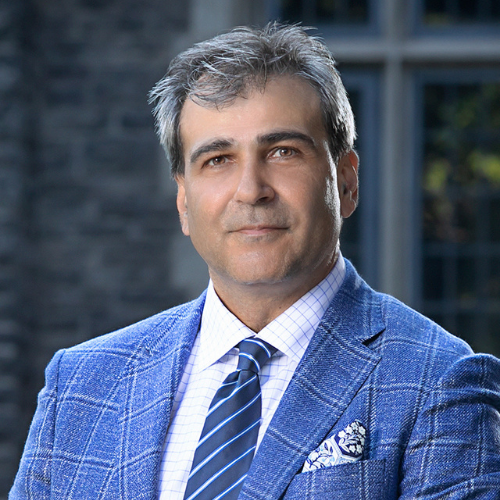
[00:00:29] Speaker B: This is Dr. Bernie Stolberg in.
[00:00:33] Speaker C: La.
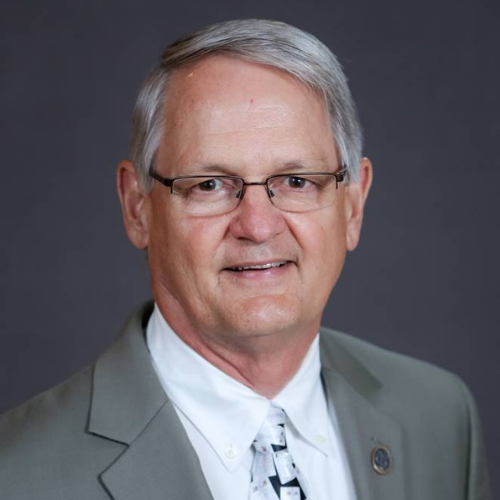
[00:00:34] Speaker B: Contara, San Antonio, Texas at the Mid America Orthopedic Association. And today I'm speaking with Dr. Anthony Guanciali who is on the board. The secretary of the Mid America Orthopaedic association has been a long time supporter.
Dr. Francella, it's nice to have you here.
[00:00:55] Speaker C: Why don't.
[00:00:56] Speaker B: I'd like to ask you to tell us who you are and what your specialty is, how long you've been coming in America.
Yes.
[00:01:04] Speaker C: Thank you. My name is Anthony Guanciale.
I am an orthopedic spine surgeon.
I have been in Cincinnati my entire career, mainly at the University of Cincinnati.
My relationship with Mid America Orthopedic association began when I was a resident at the Cleveland Clinic foundation in Cleveland, Ohio.
I got to present a paper on septic arthritis findings of the knee and actually won the Dallas B. Femster Award at that meeting and presented that paper as at that time. And that was.
And actually happened to be at the Southampton Princess Hotel. That's correct. Bahamas in Bermuda. Right. That was in 1989, I believe.
Yeah, no, I'm sorry, that would, that would have been in 1993, I believe.
And that was my first introduction to MAOA.
[00:02:17] Speaker B: I mean one of the goals of Mid America is to try to get young investigators interested in coming to a meeting, being able to present papers, get excited about doing research activities.
Can you tell us how that experience of your not only presenting but winning the Dallas Tree Banister Award kind of influenced how you thought about what you wanted to do and how that that played out.
[00:02:46] Speaker C: Certainly I, I think that it had a big influence on me as far as during the rest of my training and after finishing my fellowship, seeking to be at an academic institution.
It was one of the main influences I, I was also influenced by some of the research persons I got to work with at the Clinton Clinic.
In particular, I worked with one of the non surgeons who specialized in cartilage disorders and got to do making slides of cartilage that had undergone stress from a septic arthritis standpoint.
[00:03:35] Speaker B: Now your career now has been focused more on spine surgery.
[00:03:40] Speaker C: I've been a spine surgeon after my fellowship Training, aside from doing some general call surgery initially when I returned to Ohio and at the University of Cincinnati, but I've been a full time spine surgeon.
[00:03:56] Speaker B: And have you been a regular participant in these meetings?
[00:04:02] Speaker C: I have.
I believe this is my story 30th meeting that I've been to there.
Early in my career I was the only spine surgeon at the university. So I, I was on spine trauma call every other night. There were a few years when that prevented me from possibly attending. I don't, I don't recall the, the exact number.
[00:04:29] Speaker B: But did you be for a long time?
[00:04:34] Speaker C: I remained a member throughout that period of time and as my career allowed me, I actually started to try to be more involved with the meeting, at least as a moderator, a presenter. I gave lectures on just different topics through the years. And so I have, I've. I've had visiting persons come to the meeting and give instruction, instructional course lectures.
I myself have given in lectures like that.
[00:05:10] Speaker B: And you've been part of the board for a long time?
[00:05:12] Speaker C: I've been part of the board now for three years.
[00:05:14] Speaker B: Three years. And you're secretary of the board and. Yes, secretary of the board. And is what, given that time frame, which is quite large, that you've been, been at these meetings, what have you seen much in the way of change and what kind of change do you think has helped the, the organization grow and, and can you tell us a little bit of how this kind of fits in with your practice and what, what it does for other orthopedists in your community?
[00:05:48] Speaker C: Yes, I, I would say certainly from a spine surgeon standpoint, Met America and I feel like, or at least I hope that I help to improve and expand spine discussions at Mid America and spine presentations and actually having other spine surgeons attend the meeting.
So that was something I feel like I tried to foster.
The meeting itself was certainly always an excellent meeting to attend.
It's a fairly dynamic meeting. I would say. There's a lot of ability to participate after somebody speaks.
I think it's been a very open meeting as far as an open forum for discussion.
Certainly the other, the personal part or people might say social part of the meeting has always been exceptional. It's allowed me to at times to attend by myself and at other times to attend with my wife.
It allowed me sometimes when school synchronized to have my children attend.
So, so during busy family career parts of my career I could also attend and we've had Easter celebration at Mid America with my family.
All things have been enjoyed and remembered very well.
[00:07:25] Speaker B: Not only if the experience you share with us, valuable. But I can also second the fact that you have been a huge force in helping us and helping this organization.
It's educational expertise and particularly in the areas of spine which were less popular back in the early days.
We appreciate that. Is there any, at as UC regional meetings, are there specific things you would say to new investigators or young surgeons or residents and fellows about attending a meeting like this and why you think it has advantages?
[00:08:11] Speaker C: Certainly I, as I actually I had a conversation with a, a resident just today while trying to go out for a walk where they were, they're happened to call me and, and they, they have participated here as a resident and we'll be unfortunately not coming back to the Cincinnati area, but we'll still be in the Mid America location. And you know, a good part of our conversation was about continuing to attend Mid America and his name's Zach and he was, he was, you know, excited because again I, it was again, I think, a, an understanding of Mid America as a resident and being welcomed as a resident to present and actually being fostered to present and not being, I think, anxious about doing that as you might be at other meetings.
And so that same just really collegial approach for the residents, I think fosters a person to continue attending as they are a young practitioner and then young surgeon and then later on in their career.
[00:09:31] Speaker B: Is there anything that you think now that you're at the tail end of your career that the organization should do or that you would like to see regional groups like this or the Mid America and specific TIV to, to address that they haven't or do you feel that they're kind of hitting most of the bases?
[00:09:51] Speaker C: Brillo Hitting?
I, I'd say almost all the bases. I, I, I wish I had understood earlier on how to become not just meeting involved, but more Mid America organization involved. Earlier on I aspired at a point to be more than just the secretary of maoa and I just didn't, I don't think I caught on quick enough as to maybe how to fought for that for myself.
[00:10:28] Speaker B: Well, I can tell you that you had a huge impact on this organization and helped it and we appreciate that. And if you have any other comments you want to make, feel free to do it. Otherwise, again, thank you Tony, for all you've done and thank you for taking the time to talk to me.
[00:10:47] Speaker C: Thank you, Dr. Stahlberg. I'm a huge fan of Mid America Orthopedic Association. Thank you very much.