Episode Transcript
[00:00:03] Speaker A: Welcome to JBJS Ortho Corps. Listen as members of the ortho community, residents, surgeons, educators, staff and patients share their stories about the experiences and people most important in their lives and the lessons they learned along the way. OrthoCorps is an audio archive inspired by StoryCorps and independently organized by the Journal of Bone and Joint Surgery.
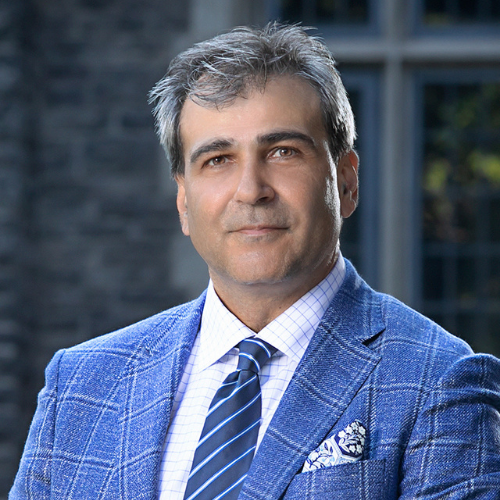
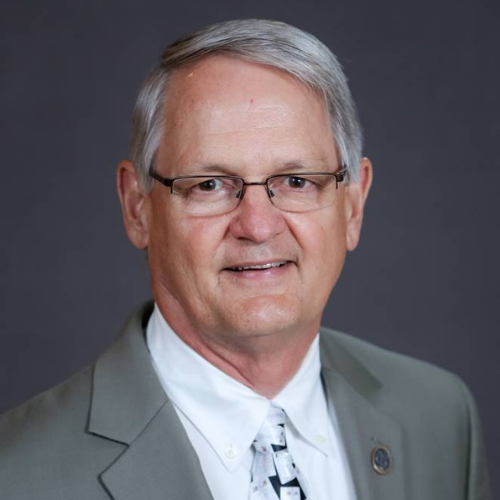
[00:00:29] Speaker B: This is Dr. Bernie Stolberg, and I'm at the Mid America Orthopedic Association's 42nd annual meeting held in San Antonio, Texas. I'm here with Dr. Jeff McLaughlin, who has been a longtime member and participant in these meetings. And we'd like to talk to him today about his practice and the meaning or the impact, if any, of the Mid America association on his orthopedic practice over the years.
Jeff, welcome to.
Storyboard, where we talk about this meeting. Can you introduce yourself and kind of tell us about your practice?
[00:01:20] Speaker C: Yes. Yes. Thank you, Bernie.
I'm Jeff McLaughlin. I trained in Baltimore and Boston, and upon the advice of my residency chair, I decided to go where there was need. So I have been practicing in rural Wisconsin for 30 years, emphasizing hip and knee replacement surgery, and I have been very happy in Wisconsin.
[00:01:47] Speaker B: Can you tell us when you first either heard about or started to come to the Mid AmeriCorps Orthopedic Association?
[00:01:54] Speaker C: Yes, sure. So I used to go to the Southern. I'm from Baltimore, and I went to the University of North Carolina.
And the current president of Mid America at that time said, jeff, you got to come out here to the Mid America. It's great.
Submit one of your papers, and I'm sure if it's good, it'll get in.
So I took his advice and I submitted a paper that I had written in private practice.
It was accepted, and I was able to present what. Which is very hard to do at the American Academy of Orthopedic Surgeons. And I felt very welcome there. And I've been coming ever since, which is about 20 years.
[00:02:31] Speaker B: And have you continued to submit papers or how do you approach this meeting when you begin to think about coming?
[00:02:40] Speaker C: Well, now I come whether I submit a paper or not.
Over the past 20 years, I think I've presented about seven papers and two or three poster presentations.
I've been on many panels over the years, and I find that's the greatest thing. We're an organization that allows chief residents and fellows to have the opportunity to present their papers, which is becoming much harder at the academy.
They get very good positive feedback. They're able to interact with people from the Cleveland Clinic Iowa, Mayo, Washington universities and other great institutions and just have a very cordial and casual conversation with those people. I found it the same way when I was young and starting out 20 years ago. And I could go up to people like Bernie, people like Dave Llewellyn and Dan Barry, and ask them questions, you know, quietly, without the worry of being embarrassed about what we were talking about. And it's really helped my practice, it's really helped my social interactions. It's been. It's by far my favorite meeting.
[00:03:56] Speaker B: Do you have any observations about how the meeting has changed over the decades?
[00:04:03] Speaker C: Well, in one thing, that strength is it's stayed mostly the same.
It really is a place where younger physicians, physicians in training, really have an opportunity to interact with everybody.
The meeting locations are fantastic. Coming from Wisconsin, it's nice to go somewhere warm in April and it never disappoints. So the core focus of Mid America really centers around their annual meeting. They put a lot of effort into it.
They're really inclusive, getting everybody from the Midwest participate, both as a presenter, as someone who's up there evaluating the presentations in a very positive way. So the core mission has remained the same.
So I think that's a very good thing.
[00:04:59] Speaker B: Do you find there any particular topics at this meeting that we're useful for you now? You've been in practice, what, 30 years?
[00:05:09] Speaker C: Well, they've actually had a lot of things on modern technology which didn't exist when I was in practice, as well as, you know, long term quality papers and presentations.
So yes, it's. It's really maintained a modern perspective. Also with regional blocks and anesthesia, I frequently now will go to the sections on fields that I'm not involved with. Shoulder tumor, foot and ankle trauma, just to keep up. And it's great. There are breakout sessions. They last an hour and a half. You can go up and ask questions and talk to the moderators.
So in that way, it's really an easy way to keep up with fields that you don't really participate in, but would like to know more about.
[00:05:58] Speaker B: Have you found anything about the.
Either the organization itself or the interactions after the meeting that might have been of any value to you. Have you reached out to colleagues at all after, when they aren't at this meeting?
[00:06:19] Speaker C: I do, actually.
Over the years you become friends with a lot of great people.
We make sure that we meet up at the Academy and some regional meetings when they're there.
I like to say that I always invite people to breakfast because everybody has something to do for dinner.
We've been doing breakfast at Brennan's when it's in New Orleans for many years. I get a table for six and now it's a table for 12. And we get together with our friends and colleagues before the meeting starts. So it's been super.
[00:06:52] Speaker B: If you were to look at regional orthopedic groups in general, what do you think their value is?
And it sounds to me as if you feel the Mid America has helped reach that at least has a good value equation for you. Can you kind of elaborate how you believe or think regional organizations ought to behave?
[00:07:18] Speaker C: Well, I think the regional organizations are fantastic. The Mid America is by far my favorite meeting, both academically and socially. And, you know, location matters a little bit. It's nice to go to a warm place. And I think the other regional meetings are really following the Mid America and are doing the same thing. The Eastern and the Western are great organizations, as is the Southern, which I used to be a member of many years ago.
I think Mid America has been a leader in that regard. And I think all the regional meetings play their role of education for residents and fellows and people who are early in their practice.
[00:08:01] Speaker B: Do you think there's anything we're presently doing that could be improved? Or do you have suggestions for additional things that might make a difference?
[00:08:09] Speaker C: Embarrassing. I can't think of anything that we need to improve on. Keep on. You know, everyone is really interested in change and sometimes what you have is already excellent.
All organizations need to maintain a modern perspective and keep up with modern things. And Mid America, I believe, has been a leader in that.
[00:08:32] Speaker B: Any other comments you'd like to make in terms of just telling our audience how they. What types of things they ought to consider when they're thinking about education or maintaining their proficiency in practice? This is your opportunity.
[00:08:51] Speaker C: Well, I think what I tell my partners and friends in Wisconsin and back in Baltimore is that this is a great meeting. And if you're in private practice like myself, it's a really good opportunity to catch up with some of the great academic institutions and find out what they're saying and doing. And don't be afraid to submit a paper, abstract or poster.
You know, if it's solid, it will get in. This is very inclusive. We want people to come and participate.
I've, over the years in private practice have had numerous paper and poster presentations, almost all of which have been accepted.
[00:09:35] Speaker B: Good grail. Well, again, thank you, Jeff, for taking the time to talk with us. And again, this is Bernice Dalber with Dr. Jeff McLaughlin talking from America Orthopedic meeting in San Antonio.