Episode Transcript
[00:00:03] Speaker A: Welcome to JBJS Ortho Corps. Listen as members of the ortho community, residents, surgeons, educators, staff and patients share their stories about the experiences and people most important in their lives and the lessons they learned along the way. OrthoCorps is an audio archive inspired by StoryCorps and independently organized by the Journal of Bone and Joint Surgery.
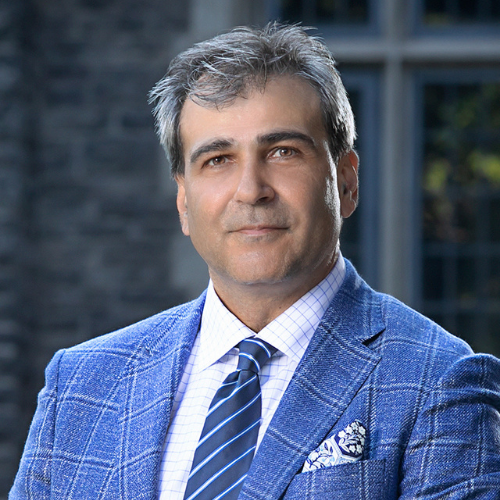
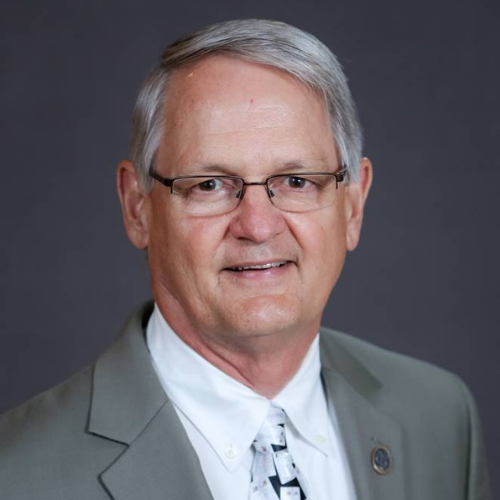
[00:00:29] Speaker B: This is Mark Swankowski in Albuquerque, New Mexico, and We're at the 20th Century Orthopedic association meeting, and it's my pleasure to talk with Dick Lackman, one of the key members of the society. He and his wife Duran, are really committed members and have provided a lot of leadership and energy to this society. And Dick's going to be talking about mentor and somebody who got him involved in the 20th century. So, Dick, who are we talking about today?
[00:00:58] Speaker C: Dr. Bruce Heppenstall.
[00:01:00] Speaker B: Yeah, and tell us about Bruce.
[00:01:03] Speaker C: So I was a medical student at Penn. I met him. He was a pretty prominent attending there. Obviously. He was a great student advocate and a lot of fun to work with.
He's kind of interesting because he was usually successful both clinically and in terms of his research, which isn't all that common of a combination orthopedics.
So he was really a notable orthopedic traumatologist before the topic even existed, really.
And he also won a Kappa Delta award for his work on the whole physiology of compartment syndromes. So he was usually successful in both realms. He was a wonderful, nice, happy person and a great mentor. So I. I got to know him a bit as a medical student at Penn, and then much more while I was a resident at Penn.
And then I worked with him a lot, and he taught me a whole lot, tragically, in terms of patient judgment and whatnot. And he was just always a wonderful, happy guy to deal with.
So when I eventually got back to Penn, I guess about 20 years after finishing there.
[00:02:17] Speaker B: And where had you gone in the interim?
[00:02:18] Speaker C: So I'd gone to. I was actually the first orthopedic tumor surgeon between New York and Washington. So I started at Jefferson. I was there for 13 years. I was at Hahnemann for 4, and then at Penn for 12 before moving to Cooper.
[00:02:31] Speaker B: Okay.
[00:02:33] Speaker C: So in Philadelphia you could move your job and not your family, which is pretty nice.
[00:02:37] Speaker B: Yeah.
[00:02:38] Speaker C: So when I went back in, I went back to Penn at the end of 1999, and then six months later, I went back as just chief of orthopedic oncology. And then six months later, I became interim chair of the department and then regular chair. So I was chair from 2000. I was chair and residency director from 2000 to 2010. And so the first thing I did when I got back there really was make Bruce the vice chair because he was. He had been a significant leader in the department, but had sort of been a little bit bypassed in terms of leadership, responsibility and whatnot. But he was a tremendous department advocate. He loved the department.
He was loved by the other faculty. He was, you know, he was certainly.
He set the huge example of how you could be successful in both realms in research and clinical care.
[00:03:28] Speaker B: Right.
[00:03:28] Speaker C: And so he was a very big aide to me as I took on the department which was having a variety of problems at the time.
[00:03:37] Speaker B: Right. So the department, if I recall right, was the chair was Carl Brighten and.
[00:03:43] Speaker C: It had been Brighton. And then he had left and fella from Mayo had taken over who.
I'll probably blankly. His name right this second. And that didn't work out well. Then they needed someone to go.
[00:03:56] Speaker B: Right. But a very research intense department, if I recall.
[00:04:00] Speaker C: Well, you know, it was actually. But when Dr. Brighton left, the research wasn't there.
So when I. Lucis lowski was a PhD short person.
So when I got there as chair, I know research budget was about 500,000 a year, but 10 years later it was about 5 million.
And that wasn't me, that was Lucis Lowski, who I just let him do his thing. He was usually capable. I kind of kept out of his way and supported him to the extent that I could. And he just took off and did and was usually successful, like re. Establishing the research tradition there.
[00:04:32] Speaker B: Right. And he's still very, very active. We see a lot of submissions from his group at jbjs and he mentored.
[00:04:39] Speaker C: A lot of the other young researchers who have been very successful. Successful. Rob Mark, one of them.
[00:04:44] Speaker B: Right. So obviously Bruce was very important in your career development and as. As a person.
So how did the topic of the 20th century Orthopedic association come up?
[00:04:55] Speaker C: He was. Bruce was a really avid supporter of 20th century. And he was.
He never missed a party.
[00:05:01] Speaker B: So he.
[00:05:02] Speaker C: He was, you know, very sociable guy. So.
And he and I had this nice significant long term relationship.
So when I became chair, I thought, gee, that's a good opportunity for Dick to get involved in this. And so he was kind enough to sponsor me. And then I came in at the meeting in Brainerd, maybe 2004, something like that.
[00:05:21] Speaker B: It was 2007.
[00:05:22] Speaker C: It was seven.
[00:05:23] Speaker B: Yeah.
[00:05:23] Speaker C: Okay, seven. So I've been a member since 2007.
[00:05:26] Speaker B: Yeah.
And Bruce was pretty active in the 20th century, he was way active, and.
[00:05:36] Speaker C: Then as he got older, he. He just had a hard time making the meetings and whatnot. And I think his health dwindled a bit, and then he sort of stepped out.
[00:05:46] Speaker B: Yeah, got it.
[00:05:48] Speaker C: But he was always a very active supporter, for sure. He was really enthusiastic about the group.
[00:05:52] Speaker B: Right.
So I said earlier in the conversation that you and Duran have been hugely committed and put a lot of work into this association. So for those who are listening to this, who may not know too much about this organization, why would you do that? I mean, you got a lot of opportunities for the use of your time.
[00:06:10] Speaker C: So Duran and I just sort of. That's sort of how we move. You know, we sort of jump in with two feet and do what we see what we can do to help. And she was a big help to me as I was chair at Penn and actually helped. She ran our appointments and promotions, and she.
She was very facile in terms of a lot of administrative tasks.
And at the time, I guess Frank Kelly was the president, and then John Purvis. And then. So she started helping John Purvis, and she just sort of started taking on more and more responsibility. I think it started out running the slides because they need somebody to do that. And then it sort of burgeoned from there. So she did. It was, you know, was about a halftime employee, as it turns out, and then that sort of got to be a bit much. So then this is the first year we've hired a specific administrator, take over a lot of that.
[00:07:07] Speaker B: Yeah, she's great. Extremely organized and very thorough and really takes care of a lot of the details of this group, and it's greatly appreciated.
So there.
There are these ebbs and flows in this association. I remember maybe a decade ago, there was lots of whining about there being too many shoulder surgeons, and, you know, not enough of this and not enough of that. So there seems to be a lot of musculoskeletal oncologists right now.
[00:07:35] Speaker C: There are, and not overwhelming, but I think that oncology is sort of a uniquely academic pursuit. There's very few people outside of academics in oncology. And then there have been a friend of people who have been very successful with department chairs, society presidents and whatnot. I think that's just put these folks in a position to be potential members.
[00:08:03] Speaker B: Yeah. And great contributors. You know, Frank. Frank Sim seems to give a paper at every. Every meeting, and it's just usually awesome stuff with huge surgeries and very crazy.
[00:08:14] Speaker C: And Frank is the opposite of anything resembling burnout.
And when I was a Mayo from my Faust, he was a. He was a double.
He was a. He was a double faculty person. So everyone else had one secretary and, like, one or. Yeah, he had two secretaries and two O's. Yeah. Because he was actually a. He was. He would just do huge numbers of cases and did them tremendously anyway. What. You know, he did tumors, he did sports, he did joints. And Frank is.
Frank is unbelievable. He's just a tremendous surgeon. Wonderful, nice person. Great, great mentor.
[00:08:49] Speaker B: Still extremely energetic.
[00:08:51] Speaker C: That's Frank. He'll be that way forever.
[00:08:53] Speaker B: Yeah, that's great.
Well, I think it's a wonderful opportunity to be a part of this group, and I hope that the members listening to it will really be able to. The members in the future listening to these recordings will be able to understand what it was like for several of the key members as the years have gone on since the 50s. And I really hope that these audio histories will help to preserve the origins of this group and some of the key members. And thanks to you, now we've got a nice bit of oral history on Bruce Heppensall. So thanks, Dick, and enjoy the rest of the meeting.
[00:09:34] Speaker C: Thanks, Mark. Thanks so much.