Episode Transcript
[00:00:03] Speaker A: Welcome to the Ortho Joe Podcast, a joint production of the Journal of Bone and Joint Surgery and Ortho Evidence.
Join hosts Mohit Bhandari and Mark Swankowski as they discuss current topics and publications.
[00:00:15] Speaker B: In the world of orthopedics and beyond.
[00:00:18] Speaker C: Well, good morning, Mark. It's a cold, cold morning in Canada, but, you know, I've got a little bit of. A little bit of coffee, so it's good.
[00:00:28] Speaker A: We had snow melt off yesterday, which is a little bit sad given our last two measly winners, but I've.
I'm sticking with my family.
[00:00:39] Speaker B: Right.
[00:00:40] Speaker A: And the only thing that's different is that this is an eggnog latte.
Tis the season for very nice, very crazy drink.
[00:00:51] Speaker B: Yeah. Before.
[00:00:52] Speaker C: Before we introduce our first. Our first of you and I are doing a couple of sittings this morning, but before we introduce our first is a great guest. I want to tell you, Mark, you'll be. You'll be proud that a resident, previous resident, called me and said, hey, it's getting cold enough. I've checked, the lake is frozen. You want to go for an ice dip? What am I going to say to that? Yeah.
[00:01:15] Speaker B: Yeah.
[00:01:15] Speaker C: So we're gonna do it. Yeah, we're gonna do tomorrow. I can't say tomorrow. I can't say no.
[00:01:20] Speaker B: Okay.
[00:01:21] Speaker C: If I've done it and then someone else sells, we should do it. I gotta go. So tomorrow I'm gonna be in some cold water. But anyways, we'll see how it goes.
[00:01:29] Speaker A: Did you sharpen the ax to get through the ice?
[00:01:31] Speaker C: Oh, he's gonna have that sorted out. I'm just gonna show up and cannonball in. That's what I'm gonna do. But we'll see. Hopefully I'll get through it.
[00:01:38] Speaker B: It'll be quick.
[00:01:38] Speaker C: It'll be quick.
[00:01:39] Speaker A: You're gonna be so much smarter tomorrow evening.
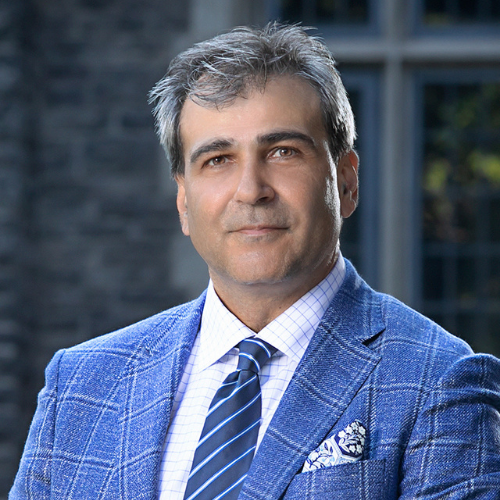
[00:01:41] Speaker C: Oh, my gosh. It's gonna be interesting. Okay, so let's introduce our first guest, Dr. Cameron Hameed, who is an orthopedic surgeon, but he's got a few other interesting background traits. He's been chief medical officer of a hospital in the Chicago region, has also been a previous team doc for the Chicago Bulls and the White Sox. And to boot, he's an award winning comedian. Welcome, welcome, my friend Conrad. How are you?
[00:02:08] Speaker B: I'm doing good. Thanks for having me. It's similarly cold here in Chicago and, well, you know, all Indians eventually get to Chicago. So one day we're expecting you.
[00:02:16] Speaker C: Maybe, maybe. You know what? I should get there. I should. I haven't been there recently, but I'll just wait. You know, you. You invite. I will show up, you know, okay.
[00:02:24] Speaker B: Anytime.
[00:02:25] Speaker C: Anytime. So some people may know you, and I suspect, you know, you' you've got a loyal following of those who know you. So when I say your Instagram handle is this is Kamaran. For some, they're saying, oh, yeah, yeah, yeah, I know, I know, I know. You know, it's the individual who does all those amazing little vignettes, those little video vignettes, songs, rap.
Maybe you just start off by telling us a little bit about, you know, how you got to where you are today.
[00:02:49] Speaker B: Yeah, sure. So I think I had probably a similar path to most of us, which was just study, study, study, and then college, medical school, residency, fellowship, practice. And when I practice, I used to ask every patient two questions. One is, what do you do for work? And the second was, what do you do for fun? And I asked them this one. There's a little bit of relationship to how we might treat them clinically. But the second was really just to get to know them a little bit better. And so one day I had a PA that asked me, just like, Dr. Hamid, what do you do for fun?
And I was embarrassed to realize that I actually didn't have any hobbies at that point in time. And so I did up comedy once in a while, but it's not really, like, something routine. And so I thought, I need to do something. And so I looked to my partners, and they all played golf. So I decided I would try to take off golf. So I.
I ended up getting golf lessons from a man who had a brachial plexus injury, but somehow he was still better than I was.
[00:03:54] Speaker C: I don't know, man. That's pretty. That's a rough realization.
[00:03:57] Speaker B: Right, right, right. It's sobering. It is sobering. So I decided to start playing. GOL residents would. I was at rush at the time. They would invite some of their favorite attendings to go on a golf outing with them, like, a little tournament at the very end of the year. And so I knew they had told me that they wanted me to come. So I was like, I'm gonna. I'm gonna get prepared. And like most people, I will be able to learn how to play golf in four weeks. And so I.
I bought some clubs. I got, like, a glove. I got my hat, and I got a black shirt and the Nike shoes, and I was ready.
And so I show up, and the gentleman who had gotten our tea time, he didn't get it. At, like, first thing in the morning, he got it, like, high noon. And it was, you know, the summer here in Chicago. It had rained the day before, so they said no golf carts on the field. But that day it was completely. It was over 100 degrees. And so I show up and I look like Tiger woods at a funeral because I'm like, head to toe in black.
And we go out there and we start playing, and I am horrible. Just like, the fact that I didn't kill anybody with one of these balls is a. Is really a win. And on the ninth hall, one of my partners, who's a little bit older than me, stops, and he asked, and he's like, is there an AED around here? And then somehow a golf cart materialized and took him away. And I thought. I didn't realize it was that easy to just ask for an aed, but I didn't have a history of cardiac MI like he did. So I finished playing. I had heat stroke. I went home and, like, puked my guts out. And then the next day, I called one of the residents that was about my size, and I gave him the gloves, the shoes, all the golf balls.
And that was the end of my golfing career. And so I realized that if I was going to have a hobby, it'd be something that I enjoy. I really, really love rap music. I always have, much to my parents chagrin. And I was like, I'm going to try to start making rap music. And so this is how I ended up making rap music. And I did that for a couple of years, and I was okay at it. And then the producer told me, he's like, you know, like, you're very funny and you're in medicine. It's like, you should consider making music that is like comedic rap music for medicine. At first I thought it was like a bit of a slap in the face because it's like, am I not good enough to do this regularly? But then I realized that, like, I don't have guns, I don't drag. Like, I barely even take Benadryl. It's like, I don't really have a whole lot to rap about. And so I decided to make this pivot to comedic medical rap music. And it is, like, is very niche. One of the nice things from a branding perspective is there's essentially no competition whatsoever.
So anyways, this is how I got into this. And then I make short little skits and stuff once in a while. But I think that the reason why I've enjoyed this as a hobby is that Healthcare is really, really tough. And we have a lot of doom and gloom everywhere, not in just the United States. And so this is something that can make people laugh and be happy. And so anyways, this is why I have gravitated towards. So this. Stuck to it. Yeah.
[00:07:10] Speaker A: Can you tell us a little bit about how you first tried stand up? This obviously preceded your more recent career, but what got into your brain to try stand up?
[00:07:21] Speaker B: Well, it's.
I'm glad that you asked that, Mark. So what happened was I was in college and I am a Muslim. I don't drink alcohol. And I just needed some way to like, socialize and be around people and stuff. And. And so for some reason, it got in my head that someone told me at lunch they're like, you're pretty funny. You should try doing comedy. So I was like, I will.
I will do this. And so I went home during the summer and I told my parents and they're very upset about this. They don't want to have anything to do with it. But in a rare act of defiance, I decided that I was going to go. So I.
I found a friend of mine and we decided to go to an open mic night at a place in Dallas called the Backdoor Comedy Club. And I wasn't 21 yet, so I wasn't allowed to actually stay inside. So I had to just kind of sit outside and I wait for them to call me to do this open mic. It's a real tiny little place. There weren't a whole lot of people out there. And then I'm like looking through and this guy steps on stage. And I was like, oh, this cannot be. And it is this Indian kid and he's like the same height, skinny, like I was at that time.
And he goes up on stage and he starts telling jokes. And it turns out that in the Venn diagram of jokes, there was a lot of overlap between our similar upbringing stuff. And I was like, this guy's ste. Feeling my thunder. Of all the places on earth that he just started to extend it, why did he do it at this club at this time?
So he did really well. His name is Paul Varghese. He actually still does stand up comedy. And so I, I then went up on stage and I told the first joke and it was okay, like full giggles here, there. And I was like fumbling the mic and I was very, very nervous. And the second mic, similar. Second joke, similar. A little bit here and there. And then the third joke I tell is kind of silent and then like, boom. It just Explodes laughter and I thought, this is how the addiction starts. And so that's when I first started doing standup. One of the things that got me ahead of other people in the world of standup was that I was very clean, so I didn't use profanity in my comedy. And it was something you could sit next to your grandparents and it was a lesson. And so I just sort of quickly climbed my way through that. I won the competition as the best college comedian country, and then I actually did stand up, what I thought was the peak of my career. I opened for Bill Cosby when I was a second year medical student, and it was a source of pride until about six years ago. And now we don't talk about it a whole lot.
So, yeah, that's how I got involved.
[00:10:05] Speaker C: Can you speak a little bit to just some of your inspirations early on? So did you have a role? I mean, you're obviously very unique, Cameron. So did you have anybody who said, okay, you should do this because, you know, you're in a very core orthopedic training program.
You're, you know, it's busy, it's hard to get into, so there's all that stuff. And then, you know, speak a little bit to just who your inspirations were at that time, and then I'll get into who your rap inspirations are. But that's the second.
[00:10:32] Speaker B: Oh, okay, okay, okay. Well, I will say when I first started doing this, especially the rap music, there was a lot of eyebrow raising. I was told once by someone that I worked with that making rap music is unbecoming of an orthopedic attending surgeon. And so I would say that it was mostly thought that it might be bad for business. And this is, you know, this is several years ago.
Some things have changed. So one is I went to my next job and my boss, Alex Ganeum, sat me down to talk to me about my extracurriculars. And I thought, oh, this is the same thing. And then he says, it can be one of your rap videos. And I was like, oh, this is my guy. So.
So I'm very thankful for Alex. He is very open minded and allowed me to express myself and do the things that I enjoyed. I would say in that time, though, the world has become a different place. On social media, people have really pushed the envelope on a lot of things, and I now seem relatively moderate or mild compared to that. And so I think the wrap stuff is okay with people. As far as people who I look to as inspiration within orthopedics, I Think it's just a lot of people who have ventured into, like. One is, like, I know some surgeons who, like, have bands. I don't know if you're familiar with Lou Shone.
He is in Baltimore, and he's hilarious. He's a magician. He, like, every word out of his mouth is hilarious, pretty much. But then he's also in a band, too, and he has. You may have heard, several years ago, he helped take care of one of the Dave Grohl, and they invited him to Fenway park to play with the Foo Fighters as well. So there's this video of him playing. Playing. Singing with the Foo Fighters. And so I would say that Liu Shone was definitely one of my inspirations. As somebody who can do this, I would say the other person actually is you. It's like, I've been a fan of yours from afar, and I have just, you know, you have. You have deviated from the path of pure orthopedic surgery into the humanities and art. And I actually, you know, I am at the University of Chicago Boot School of Business doing my executive mba. And who did. You did a portrait the other day. You had a sketch of which Nobel laureate. Gosh, I'm blanking on it right now.
[00:13:02] Speaker C: Oh, there's a whole bunch.
[00:13:03] Speaker B: Oh, yeah, hang on, hang on.
[00:13:04] Speaker C: Yeah, yeah, yeah, yeah. Like, I've been painting like crazy, but I think I know the one I'm talking about. And it was. It was about the one who. Who just got the Nobel. An older one who got the Nobel Prize.
[00:13:12] Speaker B: Right, right.
[00:13:13] Speaker C: Give me one second. Gosh, I should be. I'm.
[00:13:16] Speaker B: I think you have always been a big inspiration for me, and I was. I was excited the first time that I got to meet you at a meeting. You had given a presentation, and actually, I remember talked about how in zoom meetings or virtual meetings, how people absorb. I think, you know, I Forget. It's like 1/6 the efficiency of 6.6.
[00:13:38] Speaker C: 6.6 hours of Zoom is equivalent to 1 hour being in person.
[00:13:42] Speaker B: Yeah, yeah.
[00:13:42] Speaker C: I mean, some.
[00:13:44] Speaker B: Yeah, yeah. No, it's amazing. So, anyways, I have just. I love that you have a fresh perspective on things, and I think that is very needed in orthopedics. I had an attending when I was a medical student. He's an infectious disease doctor. And he said it is more important to be logical than it is to be correct, because what is correct changes. And I remember as a resident, we used to nail all of our tibias infrapatella 100 of the time. At one time, I asked like maybe, you know, I saw some European thing about them going peripatella or super patellar. And the way people talked to me, it was like I had asked to borrow their kidney or something like that. It was like, how could you be so stupid? This is heresy. Why would you ever even say this in front of us? And of course, now you go back and like, it's like 90% swung the other way. So anyways, I just think that it's nice to have people that are innovative and have a fresh perspective on orthopedics.
[00:14:40] Speaker A: Now before I let Mo get off on rap because he is an aficionado of the world class.
So you talked about your introduction into stand up. And I'm wondering, and how anxious and anxiety provoking such a willingness to stand on stage is.
[00:15:02] Speaker B: How.
[00:15:03] Speaker A: How would you compare that to the act of actually cutting another human with a knife when you're perhaps way less confident in your abilities than you'd like to be?
Is it a similar sort of thing? How do you shore up your inner being to be able to do what needs to be done in those two settings?
[00:15:27] Speaker B: Right. So I would say that at least at the very beginning, there's a lot of overlap between the two because there's like butterflies and fear, I think, are two things that are very overwhelming in that experience. I'm trying to harken back to when I was like a resident and they wanted you to go ahead and get the case started without someone in there. And so I think the similarities are that preparation is perhaps your best friend in that you prepare as much as you can for both settings. But then there is the unknown. And that is like a very deep and wide abyss, as we all know.
And so the similarities are that one of the terrifying, the stakes obviously much higher in surgery than they are in comedy. But I will tell you that that doesn't make the stress or anxiety of performing or talking in front of people any different. And I would say if you asked me today, that the roles have probably reversed is that I don't really feel a whole lot of anxiety when I go to do a surgery, but I still get a little butterflies before I go onto stage doing stand up, even 20 plus years later, camera can just jump in.
[00:16:42] Speaker C: But do you like to get to Mark's point? Do you believe? Because I talk to lots of folks too, right. They'll say, you know, a great day for me is just a quiet day in the operating room. I do the cases I love to do, and they know the outcomes. Is it part of I think the, the anxiety, you know, even if you go to speak anywhere is I really don't know if what I'm about to say is going to sell to this audience, whereas I know it's sold to that audience.
[00:17:06] Speaker B: Right.
[00:17:06] Speaker C: So it's this. You don't know what you're going to get.
[00:17:09] Speaker B: Is that part of it? Yeah, absolutely. It's kind of like clinic in a way. It's like clinic is much less predictable in surgery. It's like you do not know who is going to be. That's a good analogy. Next door. No, I would say after that, absolutely.
Human beings don't deal well with uncertainty. And in the. Or as we all get more and more gray hair, there's a lot of certainty in what we do and what we choose to do there on stage.
In stand up and in like keynote addresses, there are some things that are moderately controllable. So in, in stand up people are a little, I don't say customers, but like the audience members are usually a little looser in the evening. And even though I don't drink alcohol, but that usually helps them enjoy the evening a little bit more. But I have done stand up. There's a show called a conference called Shoulder360. It's an orthopedic shoulder elbow conference. It's, it's amazing. And I have gone and done stand up there many times and it's just at the end of the workday. But people are a little bit looser then.
The audio equipment is very important. So there's, you know, if the speakers are not set up well or the microphone's not functioning well, then people cannot hear you. And then it's, it's wasted.
Other things are that it's not the size of the hall that matters, it's like the density of people. And then like also basically smaller is better and more packed is better. And so all of these things, even though they don't relate necessarily to the, to the audience per se, but they can influence how successful your speech seems at that time. If it's got humor in it, I would say the exact opposite is showing up. I did this at 6:45 in the morning or something to give a grand rounds to an internal medicine.
It was crickets. It was one hour of crickets.
[00:19:03] Speaker C: So at what, at what point do you decide? Because I'm sure people are listening and thinking. You know, I'm always told if I'm nervous, start with a bit of a funny joke. And I'm thinking if you're not funny, generally don't do that. Like, it's probably not a good idea to do that because it's going to make you even more tight. But yeah, when you're having, quote, a situation where no one, like you've got a bunch of stuff, like in my mind I have times where I've had a lot of slides coming up that I'm thinking if they didn't laugh at this, I'm dead on the next three or four.
[00:19:29] Speaker B: Yeah.
[00:19:29] Speaker C: What do you do? Like, how do you like. Because obviously it's an hour and they're not, you know, they're not moving.
[00:19:35] Speaker B: Yeah, I just excuse myself and say I have to go to the restroom and say we had Mexican last night and I'll be back 45 minutes, I swear. I think it is. You just get to your message and then move on. You have to realize when to wave the white flag. Also, before I forget, is Richard Thaler. That's who you did.
[00:19:56] Speaker C: Richard Taylor.
[00:19:57] Speaker B: Yes. Right.
[00:19:57] Speaker C: 2017.
[00:19:58] Speaker B: Yeah.
But I would agree with you if you are not inherently funny, you can try a joke, but you don't have to.
I will tell our residents and medical students this, like, being funny is nice, but it's really not important. Important. Having a sense of humor is important and being a good listener is more important than either of those.
[00:20:22] Speaker C: Very good. Can I maybe speak a little bit to a big part of the reason why we thought, hey, you know, we should, we should get you on. Cameron, you, you have done yet another thing which is taken the time and energy to write a book, it looks like.
[00:20:34] Speaker B: Yeah.
[00:20:35] Speaker C: Book is called Decisions and Incisions A Surgeon's Journey from Stand up to Startup. Now I know it's not out yet, but I wonder if you can give us a bit of a taste of what the story unfolds or it's a biography, it seems.
[00:20:51] Speaker B: Yeah, it's a memoir. And so it is a memoir. But within this memoir is smuggled some business and economic lessons about health care. And in business school. And I did a Master's of Public health degree at Harvard School of Public Health as well as I learned so many things about how the world works from a theoretical level and from a higher level.
And then it seems like in the day to day slog that you sort of lose sight of these things. And so the memoir is essentially showing how boots on the ground getting punched in the mouth, like grassroots level. How do these high level economic things actually show up?
And it's told basically through stories of things that have happened to me through my life. And so all through my life, but basically mostly starting in medical school through, all the way through becoming chief medical officer, which would say probably the apex of what I did within the health system. And then also touch on some other things. Like I have a wonderful friend named Ali who went to medical school with me and he became a family practice physician. And he was in California. And because of like, there was a lot of violence, shootings and stuff like that happening in schools, he decided to moved to Canada. And in Canada he worked there for a couple years. Then he came back and I said, what happened? He said, well, he said that universal coverage does not mean universal access. And I think that was one of the most frustrating things for him over there. And so we get into some kind of stories about things like that is that healthcare is very broken in America, but never let a good crisis go to waste. And so there's a lot of opportunity over here. And ultimately the book is, is about optimism and opportunity. And there are these things that are broken and this is how we feel it on a day to day basis. And these are opportunities for how to fix this thing. Not just the United States, but abroad.
And I think it's kind of funny too.
[00:22:54] Speaker A: That's a huge topic, but so it.
[00:22:58] Speaker B: Took 65,000 words to get it done. You know, I actually started writing a book when I was a medical student. It was similar to this. And I tried to find a literary agent. And the feedback that I got was that I just needed more life experience. And So I waited 20 years and took notes and, and then that was the, the time. I also would say that one thing that unlocked the ability to write this book was that I took a storytelling class. And I would recommend that to every orthopedic surgeon because it is. We don't realize it, but we are storytellers every day. And sometimes that story is what do we tell our patients when they come in? And how do we give them hope? How do we deliver the hero's arc to them? And sometimes that story is to our staff about how do we plug through when times are a little tough. And sometimes those stories are, how do we talk to administrators about getting the equipment that we need? How do we speak, give keynote addresses like the both of you do, to inspire other other orthopedic surgeons. And so I think there's very much a room for storytelling within orthopedics.
[00:24:10] Speaker A: That's great. I just got one more MO and I'll turn it back to you. How about, how about a little teaser? Where do, where does the book Come down on the, the, the grand question of should we have universal coverage in the United States?
Is it a yes or is it a no? Or are you gonna have 14 qualifications to the answer?
[00:24:30] Speaker B: No, it'll be Bo, close your ears. It'll be a no. I still, I think it's still a cap. It still believes in capitalism, but maybe it's not working the right way. The brief version is that, you know, I'm very much have drink drank the Kool Aid at Chicago booth and Chicago booth weird trade that markets are efficient and that if, you know, if there's a buyer in the seller, they will, they will find where they need to meet. And the problem for us in the United States is that healthcare insurance has inserted itself in a lot of places it doesn't need to be. I completely believe that we need health care insurance.
But it's like I don't use my car insurance to fill up gas. I don't use my car insurance to get a car wash. Like I don't use the car insurance to change my oil. Those are elective or somewhat semi elective type things. They're not urgent. But I do use it if I get a bad car accident. The same thing with healthcare insurance. Insurance is designed to pool risk. That's what its function is.
And it has now inserted itself inside a bunch of elective stuff where it has become this intermediary currency. It's like the world's worst credit card. It charges you a huge rate and it's not accepted everywhere. And so I just think, I think there still is a role for healthcare insurance. I'm not anti healthcare insurance, but I think that we need to perhaps moderate what it's involved in and other things. We need to start having more of a direct market between the consumer and the seller. And that's what, you know, it's naturally starting to happen. We have a lot of online places where you can get not just telemedicine, but if you want to order medications, this, that the other, and you just don't want to or labs and you want to avoid health care insurance. Like it's becoming very, very affordable. So sorry, I hope that answered the question, but the answer is I do not think that we need universal coverage in the United States yet.
So.
[00:26:24] Speaker A: Good answer. It prompts me to buy the book.
[00:26:27] Speaker B: Right.
[00:26:28] Speaker C: You know, I'm going to, I'm going to end or let you maybe reflect on one of my. You've got many favorite lines in your, in your small vignettes, but one that love you just you just posted it recently and I kind of think about those individuals who feeling like, you know, it's, it's tough during residency but I'm, you know, got my research year and I'm, I'm going away and I'm writing lots of papers and I don't know why this particular. And I'm sure it's not even related to that but to me this line of yours was great. I'm 6 foot 2 on Medline. I'm 6 foot 9.
Your man is. Your man is insignificant. I'm 05.
It's a simple line but it's bang on.
[00:27:10] Speaker B: Yeah, well, you're welcome. We can end on that.
[00:27:17] Speaker C: We can end on that. But I'll tell you, it's been great, great, you know, all continued success and for those who are interested in a morning insights, lots of morning insights. If you just go to Instagram at thisis Komran k O M R you will get more than your share of laughs and, and you learn quite a bit. You've got a lot of insight and a lot of things you say and a lot of your rhymes have some metaphorical truth. So thanks again, Cameron.
[00:27:44] Speaker B: Wishing you. Thanks for having me. Good to see you.
All right, cheers. Take care. Bye.