Episode Transcript
[00:00:03] Speaker A: Welcome to JBJS Ortho Corps. Listen as members of the ortho community, residents, surgeons, educators, staff and patients share their stories about the experiences and people most important in their lives and the lessons they learned along the way. Orthocorps is an audio archive inspired by StoryCorps and independently organized by the Journal of Bone and Joint Surgery.
[00:00:29] Speaker B: Welcome to another edition of JB JS's Orthocore.
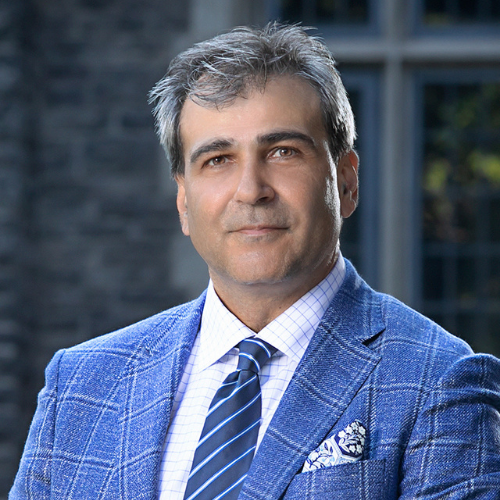
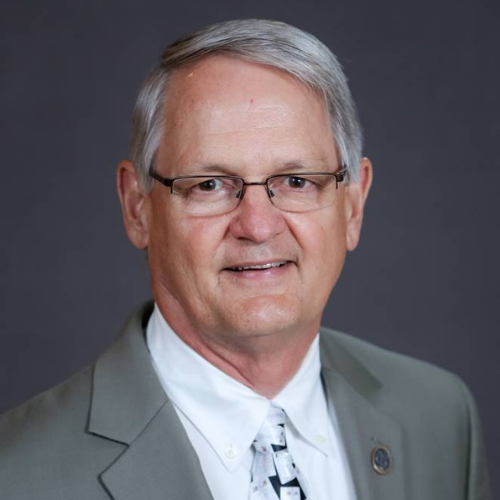
I'm Sanjeev Sabarwal, and today I'll be talking to Dr. Richard Coughlin.
Rick is a professor emeritus here at UCSF.
He's also the founder and director of IGOT, the Institute of Global Orthopedics and Traumatology.
Rick's been a leader in global orthopedics and volunteerism for at least two to three decades, and he served as the chair of Orthopedic Overseas and has received numerous teaching and mentoring awards, along with the prestigious Humanitarian award from the aos.
So, good afternoon, Rick. How are you doing?
[00:01:13] Speaker A: Oh, doing fabulous. A beautiful day in San Francisco.
[00:01:16] Speaker B: Yeah, great. Awesome. Okay, so we'll start with your career path. I mean, speaking of good weather, I mean, you've had a scenic route in your career in orthopedics. So tell us how you went from private practice, doing dual fellowships and sports medicine and foot and ankle, and then ended up doing trauma at SF General Hospital and then going on to Global Orthopedics. So please take us through your journey.
Yeah.
[00:01:47] Speaker A: Thanks, Sanjeev.
Not a typical journey, I think, that I've had.
I did my training in New York City. It came out to the Bay Area to do foot and ankle with Roger Mann and joined a group here in the city, a private practice group, and quite a nice practice.
But I had a partner, Taylor Smith, who came back from taking a trip with a group plastic surgery group called Operation Rainbow, went to China to do these post polio residual cases and had these incredible pictures. And I was early in my practice and I was just amazed at all the deformity work and the things that he was doing. And. And it completely sparked my interest.
There must be more than tennis elbow and bunions in the world. And so the next trip that came up was asked to go to Guatemala with Operation Rainbow and just amazed at the amount of pathology and the fact that you could really do an enormous amount of goodwill within a week of a missionary type trip. And that really got me going. And I had to do many trips, and every three or four months I would head off to Central America with Operation Rainbow.
[00:03:22] Speaker B: And this is when you were in private practice.
[00:03:25] Speaker A: Exactly.
I kind of needed to do that. This was the advent of managed care and it wasn't a great time when healthcare was telling you what you could and couldn't do. And.
And I think seeing what was out there, what you could do, was just so motivating for me.
And that really did spur me to maybe I needed to change my career path.
[00:03:58] Speaker B: And I know somewhere down that time or maybe a few years later, you went overseas to London and you did a master's in public health.
So was that in preparation or what made you do that?
[00:04:14] Speaker A: Yeah, you know, I think the steps in my career really was recognizing that I needed to do more. I was thinking about actually going into doing work in Africa and doing a bigger trip. And I did finally do a trip to.
With orthopedics overseas to South Africa, to the area, the Transkei. And that allowed me.
I'm sorry, I have a German shepherd that wants my attention.
But that opportunity really to spend time in South Africa with orthopedics overseas was.
Was significant for me.
[00:05:05] Speaker B: Yeah. So, okay, so that brings me talking of South Africa and what was this? Bedford Hospital, exactly?
[00:05:12] Speaker A: Bedford orthopedic center. Chris McConaughey was the.
The guy who started this program, which he was the only orthopod for about 3 or 4 million people in the Eastern Cape.
So that at that point I had already gone to San Francisco General and I had already recognized that these opportunities were very, very special.
Always taking the opportunity to take a medical student or a resident with me.
This chance in South Africa really lit a light bulb that this is the kind of experience that a trainee would really be life altering. And that's when we started our first rotation in 1999 to the Eastern Cape of South Africa in concert with the orthopedics overseas.
[00:06:16] Speaker B: I mean, that's pretty forward thinking and correct me if I'm wrong, but wasn't UCSF and what you started really the first formal orthopedic overseas rotation for residents?
[00:06:30] Speaker A: Yeah, I think, I think we laid claim to that. There might have been other programs that allowed some residents to do some things, but we formalized this rotation. We really felt like it was needed to be part of our curriculum. Although it was elective, we didn't make it mandatory. And we thought that it really did combine all the elements of resident education and cultural competency. And there's so many aspects to it that made sense to us. And it was. Fortunately, we hit a university UCSF that pretty fertile for work overseas and global work. So other programs had Similar things, but I think we were the first orthopedics surgery residency to create this kind of rotation.
[00:07:29] Speaker B: Yeah. So it almost looks like, you know, you've got a generation of residents who are now attending and they're probably, you know, that has grown exponentially.
Can you just reflect on how that rotation impacted the residents who went overseas? And I know you know, UCSF is now having opportunities to send residents to other parts, globally and mostly in low middle income countries. So just give me a synopsis of how those experiences have impacted trainees in their professional and personal lives.
[00:08:07] Speaker A: Yeah, no, it's a great question. We certainly wanted to look into that. We got a research paper into JBJS just looking at our 8 year experience of our residents electing this, this opportunity. And it was really interesting to see that it did affect their future plans.
And most of the most or many of the residents that had these opportunities certainly recognized that doing a, not just the international but a domestic volunteer opportunity would be part of their career, career paths.
So it does have a longer term effect. And I would venture to say most of our residents do reflect back and say that was the most significant part of their residency.
[00:09:05] Speaker B: Yeah, that's great.
Okay, so jumping a little bit, but I got, let's talk about. I got the Institute for Global Orthopedics and Traumatology.
And you of course were the founder and the first director of igot. Tell us a little bit how that evolved and you know, were there growing pains, lessons learned and those kind of things?
[00:09:30] Speaker A: Sure. You know, I'd say again, my iterative past probably started more.
Becoming chairman of orthopedics overseas and recognizing teaching and training and that those aspects of being involved in global work really made the, made the most sense, had the most impact. And in that regard, I knew that I lacked perhaps a little more formal education, formal knowledge. And that's where my, my opportunity to get my master's at the London School of Hygiene and Tropical Medicine took place in 2003.
I had just the year before been involved in a kind of a relief effort in Gujarat, India for the big earthquake they had. And I just recognized that there's so much that we could be doing maybe from a bigger public health perspective rather as an individual surgeon. So the combination of thinking that orthopedics overseas was on to something and maybe we could get more involved led me to London. And then I think armed with that information, getting my master's and became bigger allowed me to say that, you know, we could do, we could do something bigger than, than just do These missionary type trips or even rotations overseas.
So another one of my colleagues, Rich Gosselin had also been involved and Harry, Jurgen and the three of us kind of put our heads together and thought that having an academic to this kind of work overseas made the most long lasting effect.
So that was the origin of igot, an academic partnering that would have the most impact.
[00:11:52] Speaker B: Yeah, that's good. And I know you tell stories about, did you guys used to meet at a certain box bar across the street from SF General and you know that that's where this whole thing evolved and started. Is that, is that true?
[00:12:07] Speaker A: Well, there's frequently a bar in everybody's storyline and yeah, we had a place called the Homestead which still exists. And they were actually very supportive of our, of our hand to mouth efforts early on with early drinks being donated to. I got, but there's a back, almost like a speakeasy back room that we would meet and yeah, mostly just brainstorm about the efforts that we're doing. What sort of things made the most sense. And so it wasn't necessarily because of the alcohol, but I think it allowed us to think more freely and, and be more creative.
[00:12:57] Speaker B: Got it. Okay. So that was what, what year was that? Was that kind of in the early
[00:13:02] Speaker A: 2000s or so that, that was 2006 that we actually formally started as a initiative within the department. So I think it's important to kind of point that out. That was part of our early thinking was what we, we didn't want to be a 501C3 and we didn't necessarily consider ourselves a Mother Teresa effort. It was really how did we, how could we legitimize the work that we're doing that it would be accepted as an academic initiative that was filled with, you know, thoughtful practitioners and really use the, the tenets of academia, the teaching, training and research that fit into, you know, our department fit into the university academic model.
[00:14:01] Speaker B: Yeah. And so any growing pains, lessons learned and I mean that's been what, 17 years ago and where is IGOT now and where do you see its future?
[00:14:13] Speaker A: Yeah, it's not an easy endeavor.
It's a lot of money making endeavor. And I, you know, I think having an opportunity to go to lots of other university programs and kind of give my, my talks about this, this kind of work, you know, most people will quickly say, well where do, where do you get the funding for this?
That is the biggest challenge is there isn't money in it and you don't make money from it.
There's not NIH money.
We still lack terribly with insufficient funding for doing this kind of work. So it's been all about that. Early on we certainly did a lot with hand to mouth and I think increasingly we're or getting more philanthropic attention and I think that that's probably will continue to try to find some major funders. But ultimately we've been able to attract the kinds of young academics into our program. And currently I've been able to hand off directorship to Dave Scherer, who trained under us at ucsf, and Colleen Sabatini, a pediatric orthopedic surgeon. And actually between the two of them they're now our co directors.
And in my mind that's the ultimate was the chance that we, that there is a path for young, bright academic leaders to take this work forward.
[00:16:13] Speaker B: Yeah, perfect. And I know Dave was your mentor and so is Colleen Bean. So let's just talk a little bit as we wrap this up about mentoring and mentees and what are some golden nuggets you could share with us about you know, do's and don'ts of mentorship. I know it's, it's talked around a lot, but I'd love to hear your thoughts and I know you give us unfiltered thoughts just like it is. So let's hear it.
[00:16:42] Speaker A: Yeah, you know, it's ultimately it's about relations and really caring about your young colleagues. And I think for a long time I'm actually a late father.
I had a big birthday party this afternoon with my 12 year old and 16 year old daughters, but I think my residents were all along my first family. And you know, mentorship really is just caring, being open, being honest and you know, sharing your own experiences but, but also understanding where, where your mentees are in their, in their process and, and you know, putting your, putting yourself in their shoes and, and now being able to look around the world with the knowledge that you have achieved over 10 or 20 or 30 years. And, and so you know, that's what I've always been able to do. And the, the gratification of that comes from the same as in academia. It's just discovery. You know, you, you get to discover things together and hopefully just be a good sounding board and, and ultimately being a good sponsor for, for your, your mentees and helping them along the, their pathways. So you know, that's where the, the great, the great joy comes is watching, watching your kids grow up and be. They're clearly smarter than you and you know, let them, let them hand them the ball and Let them run with it.
I think that those are the things that I've enjoyed the most.
[00:18:29] Speaker B: Yeah. I guess sometimes the ego gets in the way. Right. And that's a challenge. How do you handle that?
[00:18:36] Speaker A: Well, it depends on whose ego. I think that there's a bit of.
I think, Founders syndrome, maybe, but I don't feel. I don't think I have that.
[00:18:50] Speaker B: No, no, no, I'm not. Of course I'm not implying that, but I'm just saying I'm actually talking. This is therapy for me, too, so. And I'm sure some of the listeners are like, well, the ego enters through the back door. And, you know, how do you, you know, mentor without getting yourself in the picture?
[00:19:13] Speaker A: Well, I. I, you know, I think you have to be in the picture. I think that, you know, the kid that your mentees are smart enough to.
To recognize that you're just not, you know, an AI generated mentor, but you. You have to be. You have to bring the human element to. To the table. And that's. That's what, you know, that's what makes it work, is that when. When your mentee really feels like they can trust you and they.
They listen to your heart at the same time. Not just your mind, but, you know, your heart, and that. That's when the real communication takes place. So, yeah, I don't. I don't lose myself in objectivity when I act as a mentor. I kind of lay it out there.
[00:20:08] Speaker B: Yeah. Beautiful. All right, well, any final words of wisdom? I know we've heard a lot, but we'll be wrapping it up shortly.
Any other final thoughts, Rick, on any of the topics you talked about?
[00:20:23] Speaker A: You know, I think we're just blessed to have such a.
Such an amazing careers in orthopedic surgery. Our profession allows us to really explore all kinds of relationships, and I think it's those relationships that we carry. Carry most dear with us and don't want to let go.
At this stage of my career where I think about not just being an emeritus, but do I think. Do I let it all go?
I haven't been able to yet. I still like to have those relationships near and dear to me.
[00:21:04] Speaker B: Absolutely. All right, well, such a pleasure talking to you, Rick. Thank you so much. Enjoy the rest of your afternoon and the post Birthday celebrations.
[00:21:14] Speaker A: Yes.
Too much cake today.
[00:21:18] Speaker B: Well, you. You know how to burn those calories.
Thank you so much. Take care.
[00:21:23] Speaker A: Thanks so much, Sanjeev. Take care. Bye. Bye, Sam.