Episode Transcript
[00:00:03] Speaker A: Welcome to JBJS Ortho Corps. Listen as members of the Ortho community, residents, surgeons, educators, staff and patients share their stories about the experiences and people most important in their lives and the lessons they learned along the way. OrthoCorps is an audio archive inspired by StoryCorps and independently organized by the Journal of Bone and Joint Surgery.
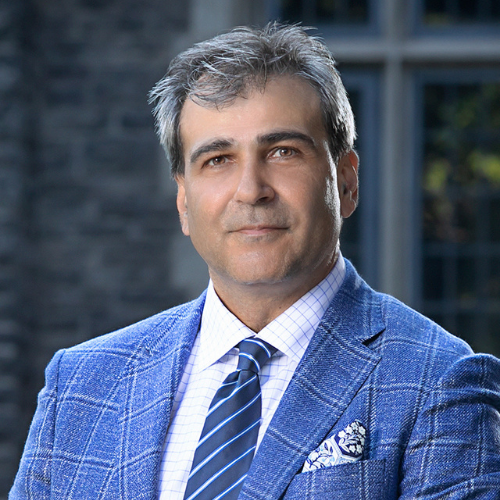
I'm Serena Namdari, a shoulder and elbow surgeon in Philadelphia at the Rothman Orthopedic Institute. And I'm here today with one of my senior partners, Dr. Gerald Williams.
The purpose of this interview is to talk about the evolutions in shoulder arthroplasty during Dr. Williams career.
For those who may not be aware, Dr. Williams has significant accomplishments in our field.
He was a past president of the American Shoulder and Elbow Surgeons, past president of the aaos. He's currently the John Fenlon professor at Thomas Jefferson University.
His accomplishments are really too many to note in this short interview, but he has also made significant contributions educationally. He's trained many fellows and residents. He's made significant research contributions, mostly in arthroplasty, and. And he's been an innovator in our field as well. So I think he's the ideal person to talk to us about innovations and shoulder replacement. So thank you, Jerry, for doing this.
[00:01:37] Speaker B: Thank you.
[00:01:39] Speaker A: So, you know, I want to start by just talking a little bit about your training years.
And, you know, we're sitting in my house in Philadelphia and we're drinking some tequila. And so one of those tequilas is Selexion Suprema Herodera, which I know has some meaning to you from your training. So if you could tell me a little bit about that and our listeners about that, that'd be great.
[00:02:03] Speaker B: So I trained in San Antonio with Charles Rockwood, and at the time that I was there, it was actually a very special place.
Besides Dr. Rockwood, we had Jim Heckman, Jesse Delee, David Green, Tom o'. Brien.
I can't remember all of them, but it was a big group. And obviously Dr. Rockwood had a tremendous effect upon me.
And one of the things that was a tradition of Dr. Rockwood's fellowship, which I'm not sure could exist today, but on certain days when we would finish clinic, I would get the high sign from Dr. Rockwood that meant that I was supposed to get a coffee pot and fill it full of ice cubes and meet him in his office.
In his office, he basically had a full bar. He had a refrigerator with smoked fish, peanuts, cheese, stuff like that. And we also had Cigars.
And those were sessions where he and I would talk about life, talk about shoulders, talk about all kinds of things. And it usually occurred over a glass of selection on Suprema.
So that's how I first. I never, ever had a drop of tequila before I met Dr. Rockwood.
And so that was something I remember about my fellowship. Maybe better than anything else were those sessions. We did it probably at least once a month, sometimes twice a month, and they usually lasted an hour or two.
It was just a great time.
[00:03:37] Speaker A: Well, I'd say you've passed that along because for sure, I wasn't a huge tequila drinker until I started working with you 10 years ago. And now, you know, my bar is stocked with it. So you've made it. You've carried that forward.
So, you know, talking about your time with Dr. Rockwood as a resident and a fellow, tell me a little bit about the volume of shoulder replacement that was being performed by Dr. Rockwood and how that compares to what we do or what you do today.
[00:04:06] Speaker B: Well, if you look at the years that I was there were 1984 through 89 as a resident and then 89 to 90 as a fellow. And he developed the global shoulder with Depew.
I would say mid-80s, 85, 86, somewhere in that ballpark at that time.
If you subtracted fractures, which is what shoulder arthroplasty was originally done for, if you subtracted fractures and just looked at the number of arthroplasties that were done in the entire United states in the 1989-1990 range, it was maybe 150,000. I mean, it was really low. That's probably a high number. It was probably less than 100,000 when it first started.
And I don't think Dr. Rockwood ever did more than, I mean, the years that I was there. If he did more than 150 cases, it wasn't a lot, but almost all of them are arthroplasty.
And obviously he did hemi arthroplasty for a long time and then began to use totals more towards the end of his career and the beginning of mine.
[00:05:20] Speaker A: So that's great. So that takes me into my next kind of question. So tell me about the designs at that time on the humeral side and on the glenoid side. It sounds that like, hemiarthroplasty was certainly more commonly used.
But what was being used on the glenoid side?
[00:05:36] Speaker B: Well, they were all polyethylene components.
Prior to the release of the Global Shoulder by depew, the glenoid Was prepared completely by hand with a hand burr. They were almost all keeled components. In fact, I would say the only other component that had pegs at that time, I believe, was the zimmer prosthesis, which was fenlands, but I'm not positive about that.
At any rate, you basically used a hand burr to try to make the back of an osteoarthritic glenoid or the surface of an osteoarthritic glenoid congruent with the back of a polyethylene component. And it was really crude. I mean, you would make the slot for the keel, and then you would go to the surface and try to make it curve. Most of them were flat. Some of them had, you know, biconcavity. And the idea was to make it one concave surface that would fit the back of the glenoid. So you work on it a while. You put the trial component in and run your thumb back and forth and see how much it rocked. And if you thought it rocked too much, you'd take a little bit off here or there. When you finally got to a point that you thought it didn't rock that much, then you would put the cement in the keel hole and put the component in place and hold it there until the cement dried.
And actually, I think it was the global shoulder, I'm almost positive, which was the first system that had concentric reaming of the glenoid With a prepared reamer that would create a known curvature. There was no guide pin. It was a drill hole that you would use. It was not piloted over a guide pin.
But the idea behind it was to make it so that the surface, the glenoid, exactly matched the back of the glenoid component.
I think the ayers was the first one to do that, and now everybody. I mean, nobody would expect to do it any other way at this point, Although that's not altogether true. Some of the companies that are coming out with 3D printed implants that fit the patient's anatomy, you're back to very little in the way of preparation. It's kind of interesting. It's full circle.
We went from trying to make the surface of the glenoid fit the back of a glenoid component completely freehand to then machining it relatively precisely over a guide pin. And now we're at the point where there are people saying, why should we take any bone away? Why don't we just put the metal or whatever glenoid you have on the surface of the glenoid and not take anything away? Particularly in reverses, where that's happening first, but I could see it going to anatomics as well.
[00:08:24] Speaker A: It's amazing how that evolution has happened. What about the humeral side?
[00:08:29] Speaker B: Well, again, remember that arthroplasty, anatomic arthroplasties came about as a result of trying to fix four part fractures that were not amenable to open reduction, internal fixation prior to those times. And that was probably, I'm going to say that was mid-50s. There had been a period of implants that were basically not always reversed, but they were constrained implants that were done for arthritis and really had not done very well. So Near, Charles near, was the one that was sort of the watershed person between those constrained designs. And there were many.
In fact, his first design was a constrained design, but he sort of figured out early on, at least with what they had, that the anatomic implants was better unless you had no rotator cuff.
And so the humerus was originally designed to try to look like a humeral head. He didn't have too many choices. He had two neck lengths, a couple of curvature differences, and it was basically on a stem, standard length stem that would be considered long today with no porous coating.
They had a couple of fins at the top that you could put into osteoarthritic or bone that was good bone.
And basically people stopped using cement even though there was no porous coating.
So the original humerus was supposed to be designed after normal anatomy.
And the idea was to make it as anatomic as you could. And if you look at some of the older studies from some of the older implants, they would never be considered anatomic reconstructions today they did pretty well.
But it wasn't until later on that people started really trying to make sure that the curvature of the humerus was fit anatomically and it was put in the right place.
[00:10:28] Speaker A: So if we think back to a young Jerry Williams going to shoulder meetings in training or in fellowship, what were the major problems that were being discussed at that time on the podiums?
[00:10:40] Speaker B: Far and away the most common one was hemiarthroplasty versus total shoulder arthroplasty. That was by far the biggest debate.
And interestingly, Dr. Rockwood, even though he had designed a total shoulder system that had a glenoid component and he used it some, he was still a big proponent of hemi arthroplasties. And quite frankly, Near's original series of osteoarthritics were hemiarthroplasties. And so the argument was hemiarthroplasties work fine. Why should we take on. We know that the glenoid is going to be the weak link. It's going to get loose, it's going to wear.
So why don't we just do hemis? And that went back and forth, back and forth, back and forth for years.
And then there were a couple of studies that came out that really and truly compared apples to apples, hemis versus totals.
And I think this was probably in, I'm gonna say the mid-90s, where I think people finally accepted that totals had better pain relief.
But there was the issue of glenoid component losing. And I remember, I don't know how in the world I was ever asked to be the moderator of this panel, but I was. I was a moderator, moderator of a panel on hemi versus total shoulder arthroplasty. And I don't remember all the participants, but three of the participants were Charles Rockwood, Rick Mattsman, and Louis Bigliani.
And I don't know how I got to be moderator of that, but everybody was arguing. And at the end, we had just a little bit of time to go.
I said, I'm going to ask all three of the equation. I just want you to raise your hand one way or the other.
I'm going to tell you that when you get home to your offices on Monday, they will magically appear on your desk a glenoid component that lasts 50 years.
How many people would put a total shoulder in versus a hemi arthroplasty? And they all raised their hands. It wasn't even close.
So it was clear that they all knew that total shoulder arthroplasty had better pain relief. But they were concerned about glenoid component durability. And that was mid-90s at the most.
And we're sort of still in the same place. I mean, we've been argument about whether, you know, all polyglenoid components are going to be the answer. And my, my own feeling is the trend that you've seen towards reverses taking over anatomics in terms of shoulder arthroplasty, where it's now the lines cross. There's more reverses in anatomic stone in the United States that will never turn around until there is a more durable glenoid articular surface with an ability to manage deformity as well as you can with reverses in a similar way. I was on a panel recently in a meeting with a bunch of guys that were all reverse guys. Andy Jawa, Pat St. Pierre, those kind of guys.
And I said to him, if you Got home on Monday and you found that there was a glenoid compound that lasted 50 years and allowed you to address deformity just as well as reverses. How many of you would do anatomics? They all raised their hands. So it's the same thing all over again.
And I think we still have the same problem, which is trying to figure out how to get a glenoid articular surface that lasts as long as a reverse and is just as easily able to manage deformity. We're at the same place we were in the mid-90s, but for a slightly different reason, since, you know, there's no.
[00:14:06] Speaker A: Doubt reverse has taken over in a lot of ways, especially. Especially for some of the problems that we think are questionable for an anatomic. So, you know, my question is, I'm going to give you a few scenarios, and I'd like you to tell me when you first started practice, maybe early career, what were you doing for these patients? Because you didn't have the reverse. So let's say you had the patient with a retroverted glenoid with eccentric wear to, you know, bad B2.
[00:14:34] Speaker B: So initially, yep, we didn't have Augments.
[00:14:36] Speaker A: Right.
[00:14:37] Speaker B: I mean, I don't remember when we sort of revisited the Augment. Joe Ioannotti and I revisited the Augment when we were still designing things for Depew, but I'm going to say that it was maybe late 90s, somewhere in that ballpark before that, you know, we were doing the same thing we were doing when I was a resident, which is asymmetrically reaming the high side. We were accepting residual deformities.
We had a fair amount of posterior instability that we would manage with capsule Orpheus. That's what we did.
[00:15:07] Speaker A: And were you reaming into cancellous bone.
[00:15:10] Speaker B: When you did it?
[00:15:10] Speaker A: Yep.
[00:15:10] Speaker B: Yeah, there was that concept. The concept of over reaming didn't exist. And especially if you had kills, if you had a keeled component where we didn't have to worry about getting the pegs into bone because, you know, as, you know, as you read immediately on the glenoid, it gets. The size of the glenoid gets smaller.
So we had keels. And in fact, I remember people saying, even people that use pegs, most of the time, they get asked, when do you use keels? And a lot of them would say, if I have a really bad B2 glenoid that I had to ream the high side on, I'd use keels.
So, you know, we were doing the best we could with what we had And I think augments, and I'm biased. I designed augments with two different companies.
I think that they, I mean, the concept of. We've changed from the concept of ream as much as you need to ream to make it work, to ream as little as you can leave as much bone as you can leave for a number of reasons, the next operation will be easier. Number two, at least in my experience, the more you ream, the more trouble you have with instability.
So we've gone from don't worry about how much you ream and try to get the version back to as good as you can. And you would think if, you know, if we were thinking ahead, we would have had components that were thicker symmetrically because we medialized the joint space somewhat. But, you know, that didn't come up for a while.
But the bottom line is we've now gone to a position which I think is the correct position, I think is true, whether it's anatomic or reverse. Take away as little bone as possible, which is what, you know, I think that originally brought about the augmented phase, and now we've got them on both anatomic and reverse implants.
But I think at the next step, if you really and truly believe that reaming the least amount you can is the right way to go, we're probably looking at patient specific implants with 3D printing. That. That's my gut feeling. I mean, I've been asked multiple times on the podium what I think about that. And you know, I'm an augment guy, I design prosthetics with companies.
But the bottom line is if you take away cost, it's hard to come up with a legitimate argument against that concept. It really is hard to argue.
And I think that's where I think we're eventually going to get, to be honest. And I just hope that we come up with some anatomic glenoid component that perhaps has some sort of metal backing that allows us to sort of change the curve with regard to anatomic versus reverse. Because I think everybody knows that if, unless the deformity is really bad or the cuff is bad, anatomics are better if they're done well.
[00:18:02] Speaker A: So do you think there could be any issue with not preparing bone in terms of ingrowth and healing? So do you think we, by doing that we may be creating other issues?
[00:18:12] Speaker B: Well, I think you're going to have to do something to the surface to make it a bleeding surface, and you're going to have to have something in the bone I believe, because in the end you have to have something for ingrowth and you have to have initial fixation that allows so little micro motion that there can be ingrowth.
But I really do think we're close to something like that. What we do now, I mean, the patients that have no deformity, you could argue what's, you know, there really isn't a justification to increasing the cost because anybody who does a lot of shoulders, those aren't problems. But you get into deformity.
The more deformity you get, the harder it is to manage with the current anatomic implants that we have. And the results between those patients and a reverse for the same patient are getting closer together for that particular patient population.
Again, I think the only thing that's going to change trajectory of anatomic total shoulder arthroplasty is a change in the glenoid side. I don't think anything else will.
[00:19:23] Speaker A: So at the time, let's say early in practice, what about the patient who had arthritis and had a cuff tear or cuff was thin, you know, what did you do?
[00:19:32] Speaker B: Well, that was another controversy so near. And his disciples would say, it's no problem, I can fix them all. I'll just put in a total shoulder and fix the rotator cuff and everything works just fine.
And that maybe worked in Nir's hands, but it didn't work in anybody else's. And so that was one of the few cases where Dr. Rockwood's hemiarthroplasty was popular. And Rick Mattson used to wrote an article about making the head a little bigger to bring the head down some, the center of rotation down some.
So I would say that before the reverse, I would say that probably 90% of people that did any kind of arthroplasty for that patient did a hemi arthroplasty, and 10% did a total shoulder arthroplasty.
[00:20:16] Speaker A: And you would fix the cuff when you did your hemis?
[00:20:18] Speaker B: Well, it depends upon whether you train with Rockwood or somebody else. What would you do if you train with Rockwood? You didn't do anything. You didn't do that. If you took down subscapularis that Dr. Rockwood very early on talked about putting the humerus in through the hole in the rotator cuff without taking anything down. He talked about that very early, and I did that a few times in my younger years. And his idea was they're usually patients that had these large cuff tears, a little bit of arthritis, but their function was still Pretty good. They just had pain.
So his idea was to fiddle with their anatomy as little as you had to to get a smooth articular surface on it.
And, you know, I think that would be something that a lot of people would say today.
I remember forget who the fellow was. It might have been Barlow who asked me if we could look up the results between my hemi arthroplasty.
[00:21:12] Speaker A: Yeah, that was John Barlow.
[00:21:13] Speaker B: Yeah, I remember that stuff. And I was positive that my hemi arthroplasty did better for a number of reasons. I picked the people who had pretty good motion. I picked the best of the best to do my hem knee arthroplasties on. As it turns out, my reverses were way better.
So that's when I started doing a little more reverses.
So.
[00:21:30] Speaker A: So if we speed forward to reversed in 2004, when the reverse came out, what did you think at that time the future of the reverse would be?
[00:21:40] Speaker B: Well, I can tell you that it was before then that we were asked our opinion. The design team for most of the showers on Depew was myself, Joe Ioannotti, Laurent Lafoss, Ludwig Seabauer, Anders Eklund.
I'm probably forgetting somebody, but those are the big guys. And Depew was looking to buy the company that had the reverse in France.
And they asked all of us, what percentage of the market do you think reverses are going to have?
We either said 10 or 20. I'm not sure. I think it was 10.
So we had no idea.
Shot that one a mile.
And, you know, I'll be honest with you. I really credit Mark Franco, at least for in the United States. I mean, he was early on saying that you got to do a reverse in these patients that make them of anything close to normal kinematics, the results will be better. And he just got hammered.
For the entire time he said that. As turns out, he was right. So, you know, reverses are now more than 50% of arthroplasties in the United States. I personally think it's overused. That's my own opinion. I think people do it because it's easy.
You know, a lot of people who do reverses, but not as many as before, don't do that many of them. So when they do a reverse, it's probably not much different than when they did totals. They can release those supraspinatus to get good exposure to the glenoids, so it's easier and it lasts longer.
So I think that's why a lot of people do them.
But the bottom Line is if you know how to do an anatomic implant in somebody that doesn't have a cuff tear or really bad deformity, you ought to be able to make your anatomics better than your reverses.
[00:23:21] Speaker A: I agree with that.
So what were your initial thoughts when there was this controversy between the Gramont philosophy and the Frankel philosophy? You know, initially when it started, you know, everybody thought Mark was. Was crazy for 10 years. Were you in that boat as well or were. Yes, okay.
[00:23:39] Speaker B: Yes, I was. But the thing that was amazing about. Because the people who were pushing the Vermont, I mean, you know, these are Jill Walsh, you know, I mean, these are guys that are icons that we all looked up to and were hardly ever wrong in anything they ever did.
So here comes this guy from Florida who's relatively young, he's pretty opinionated, he presents at every single meeting. And he just got lambasted for like 10 years. I'd say about five years into it, Joe Ionadi and I, who were together at the time, started saying, oh, this guy's either right or really crazy. It turns out he might be both. But the bottom line is he was right about a lot. You know, 135 neck shaft angle and lateralization. The glenoid, you know, there's this thing about, you know, medial glenoid, lateral humerus, lateral glenoid, medial humerus. There's all kinds of stuff like that. But the bottom line is the concept of lateralizing for any reason anyway, when Mark brought up these ideas was heresy.
And so I do think that there is better range of motion, at least in rotation.
Don't know about the stress fractures. You can. That goes either way. But the bottom line is I think the concept has changed.
[00:24:54] Speaker A: So what do you think is the. You talked a little bit about how you see anatomic arthroplasty as continuing to dwindle until we have better long lasting option on the glenoid side.
So what do you, do you think that's in the near future? Do you think that's 50 years in the future?
And so based on your answer, what do you think the future of anatomic shoulder replacement really is?
[00:25:21] Speaker B: So the problem is that if you're going to use metal backing or metal of any kind on the back for glenoid, it's probably an ide, which means it's going to take at least five years for that to occur. And a company's got to be willing to spend the money and do it, which makes that a pretty high hurdle, to be perfectly honest with you.
So I Mean, given that, I think that somebody will do it or at least start it within the next two or three years, but it'll be another five years after that before it happens. In the meantime, you know, I think all polyglonoids in people over the age of 60 with minimal deformity and a good cuff, it'll last 15 or 20 years. It's when you start getting B2 glenoids and even B3 glenoids that you fix with a full wedge poly component, that's when you start. You're going to start seeing the durability drop down. And if you look at the difference between those and reverses, particularly given the fact that reverses, we still don't know how long they're going to last. But if you look at the failure rate at 20 years, it's low compared to anatomic implants.
So I think there's going to continue to be dwindling of anatomic total shoulder arthroplasty. It's going to, it's going to be sort of like, in my way of thinking, it's going to be sort of like what happened with hemis and totals. You know, the hemis are going to still go down and still go down. And finally totals took them over.
I don't see that changing or being different with anatomic versus reverse unless or until there's a articular surface that manages bone loss as well as reverses.
[00:26:56] Speaker A: And then, you know, in the same vein, what do you think is the future of reverse? What's left to innovate with reverse?
[00:27:03] Speaker B: So if you look at what's, what's the Achilles heel of anatomic, it's number one, it's harder. So the results are less predictable. In my mind, you got to do them well. I mean, there's a. There's a little bit of flexibility in how you perform a reverse. You don't. There's. There's a bigger window of error. Error that is acceptable with anatomics. There's very little.
So that's, that's the first. So that's the bugaboo. And the second bugaboo is glenoid component durability and I guess cuff durability.
The Achilles heels for the reverse. It used to be cost was one of them, but cost has come down. It's still more expensive than atomics, but not by as much as it was. The other two bugaboos are stress fractures and less range of motion.
Those are the two things. So I'm not sure how much you can improve the Range of motion. To be honest, I think to a certain extent there are some anatomic factors with the patients that contribute to range of motion. And I'm not sure what, how you're going to, you know, handle the stress fracture issue. I mean, if you look at all the, you know, the review type articles, it's around 4%, which doesn't sound like a big number, but if it happens, even if you fix it, the results not the same as it was.
So I think those are the two bugaboos for reverses. And I don't know what innovations can manage either so far, to be honest.
[00:28:33] Speaker A: So, still, things to figure out. You know, I really appreciate you doing this with me, Jerry.
You know, I joined the Rothman Institute 10 years ago, and I've had the fortune of listening to you and Matt Ramsey and Mark Lazarus and many others talk about these issues every week in our shoulder and elbow conferences for 10 years. So I feel like I've learned so much, and I'm just glad that the listeners of the ortho core will have the opportunity to get a sneak peek into what we experience almost every week with the fortune of learning from you. So thanks for the history lesson and from your own perspectives on what's happened to shoulder arthroplasty over your career.
And I know you still have a lot of years left to go, so.
[00:29:20] Speaker B: Well, first of all, we learn from each other.
I've learned as much in our conferences as you have learned from me. I mean, all you have to do is keep an open mind and realize that some of the things that you might have thought of as being dogma aren't really true.
And if you leave yourself an open mind, you learn. And I've definitely learned as much as I taught in the years that I've done this, that's for sure.
[00:29:47] Speaker A: Well, thank you, Jerry. I hope the conversation was good. And I hope the tequila was good, too.
[00:29:53] Speaker B: It was.